

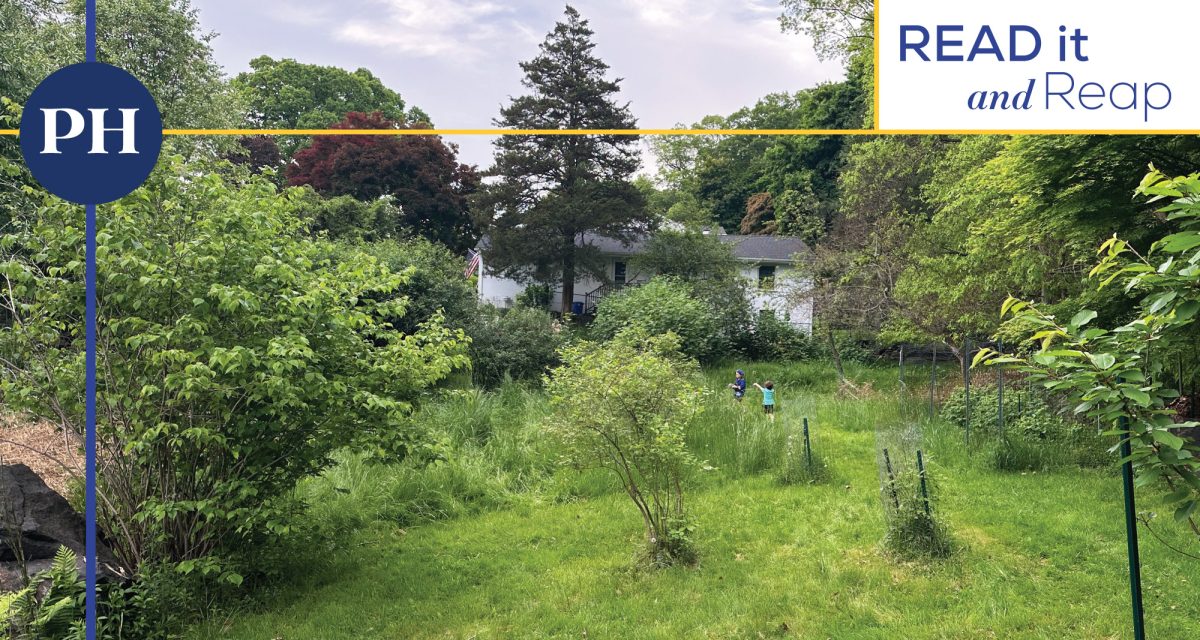

In case you haven’t seen, heard, or sniffed the news, spring is here. With the return of long-awaited firsts (the first peas to pop, the greening of dormant plants, the first few hours spent getting dirty outside) come a few firsts that the winter mercifully stopped — among them, the first sunburn, the first groundhog nibble, and the first few hours lost to mowing the lawn.
This is not to say that I don’t like mowing the lawn. I love the sight of my own cleanly defined lawn, sense an American swell of pride in its greenness and openness, and feel myself joined to a long chain of homeowners before and around me who also cut the grass. But the more time I spend in “rewilded” landscapes (landscapes that have been deliberately planted with site-suitable native species), whether they’re pocket parks or full meadow installations, the more my mind opens to the possibility of life beyond the lawn.
Grass Class: A Primer on Lawn
First, what do we mean by lawn? Around here, we’re able to grow cool season grasses like including Kentucky bluegrass (Poaceae), perennial rye grass, and both fine and tall fescue, often mixed with white clover. As the name would imply, these grasses love springlike or autumnal weather, and only tolerate heat with adequate water. All these species are Eurasian in origin.
The lawn first appeared in the public consciousness as a green space kept by the aristocracy in the seventeenth century. That a staff and perhaps a herd of sheep was required to keep it a manicured place for leisure reinforced the notion that its landowner was truly successful. With the advent of the lawn mower in the 1870s, the costly custom of maintaining a carpet-like yard became something a homeowner might do on their own.
Fast forward to the present: the lawn is the biggest crop grown by acreage in the United States. It covers 40 million acres, an area as large as the state of Colorado. To keep our lawns green and rolling, billions of dollars are spent on watering, pesticides, and fertilizer, increasingly by commercial landscaping companies. The grass we have installed has replaced the diversity of the ecosystem, turning what was once an all-you-can-eat buffet for countless organisms into a sterile wasteland that’s appreciated by one species, whose primary form of interaction is walking on it. The deadly chemicals we use to maintain its homogeneity wind up on our children’s skin and quickly into the water supply. How has a plant that we neither eat nor make fiber from, that we don’t even allow to bloom so we might appreciate its flowers, become the one that Americans spend the most time, energy, and money on sustaining?
A Growing Movement: No Mow May
Enter No Mow May. Today, this movement is associated with Bee City, USA, an arm of the Xerces Society for Invertebrate Conservation. Recognizing the importance of insects as foundational to the food chain and bees as especially valuable to the production of large-scale agriculture, the mission of these organizations is to raise awareness of the decline in bee populations and target actions to revive their numbers.
A few other facts about this phenomenon: Begun as a campaign in Great Britain, No Moy May may not actually be the right time to forgo trimming the lawn in different parts of the United States. For this reason, advocates may include the phrases “Low Mow May” or even “No Mow April” to suit the climate of the Northeast.
So why participate in this trend? It gives your lawn — and all the other flowering plants that might be hiding in it — a chance to offer more habitat, and possibly more food in the form of pollen, nectar, and seeds, to more organisms, especially native bees.
The Weeds in the Grass
It’s possible that there are the seeds of “good” things in your lawn, but the likelihood is much higher that what you have are exotic invasive weeds.
“But wait,” you find yourself asking, “What’s the problem with exotic invasive weeds? That’s more biodiversity, right?”
Remember that the definition of a weed is a plant that’s growing where it isn’t wanted. These were brought, inadvertently or not, by humans. They threaten ecosystems here because they have less natural competition, meaning that they can crowd out the native species that coevolved with the wildlife of that area. This means that you’ve replaced one grassy monoculture with another, more aggressive one — think tough invaders like mugwort (Artemisia vulgaris), Japanese knotweed (Reynoutria japonica), or any of these vining species, all of which require significant resources to remove once established. Gardeners, scientists, and activists agree that the healthier yard is one that includes more native species and fewer exotic invasives. This landscape supports other native species up the food chain, making it more likely to have an intact and thriving ecosystem.
So No Mow May, which started as a way to increase biodiversity, may actually have the opposite effect; it turns out more lawn equals less types of life. Another big worry of those who disagree with the phrase is that caretakers of the land will forget about the rest of the year after that month.
What’s an Eco-minded Gardener to Do?
I think we’d do well to adopt a wide range of approaches, in whatever dose feels right, to embrace the ethos of landscape designer Leslie Needham when she said: “think ‘throw rug’ rather than ‘wall-to-wall carpeting’” of our traditional lawns.
Consider one or all of the following tips when thinking about how to reduce your lawn:
- Plant a “lawn” of traffic-friendly native groundcover. Good candidates include wild strawberry, many species of native sedges (like Carex blanda and C. pensylvanica), and Eco-Grass, a hybridized blend of fine-leafed fescues that grow deeper roots, making better use of water resources and offering superior erosion control. These species need only to be mown once or twice a season, or even less if the effect you’re going for is more shag rug than Astroturf.
- Mow higher, and less frequently. As any good groundskeeper knows, mow too low and you risk exposing the roots of your grass to the sun, effectively burning their growth mechanism. For each cutting, keep at least two-thirds of the length of your grass to ensure that it continues growing evenly, and can shade out the seeds of competing invasive weeds.
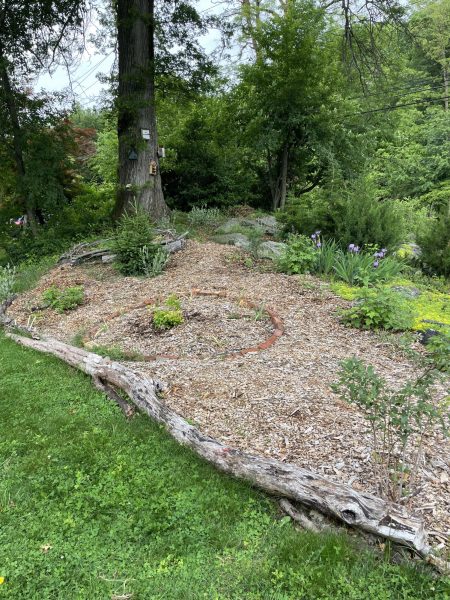
- Limit how much lawn you have. This is a golden opportunity to learn how to turn your green space — however small — into what Doug Tallamy calls our collective “homegrown national park.” Here’s a standard approach, and one that you can still pull off at this stage of spring in time for a summer display that attracts and sustains pollinators: sheet mulch an island or strip of lawn by laying down layers of de-taped cardboard or newspaper, thoroughly dampened, and layering wood chips, leaf mulch, or straw. Then, plant plugs of native plants that are suited to the site conditions.
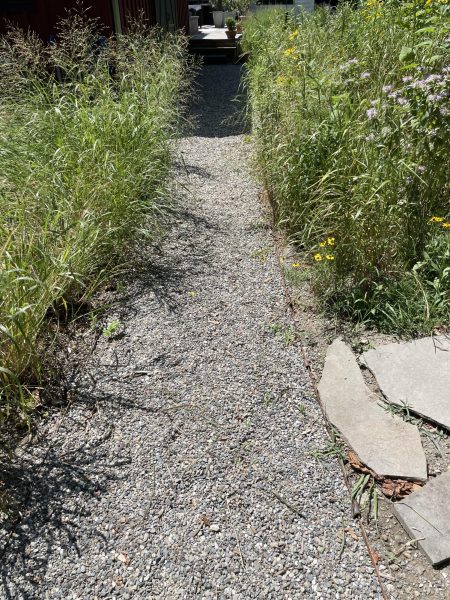
- Consider only mowing paths and creating meadow spaces between the paths. Take a look at what’s growing in those spaces, and identify what’s there — you may be harboring volunteer natives for free! Entertain the idea of laying paths with cut logs, woodchips, or pea gravel — the more you use what’s already there, the more eco-friendly the process.
- Use less fossil fuel to achieve a mowed lawn. Make the switch to push or electric mowers and leaf blowers.
- Resist the use of fertilizers, herbicides, and pesticides in your lawn. Instead, consider mulching cut grass and leaves into the lawn as you mow. Become familiar with and use low-toxicity insect control methods like mosquito dunks. Identify and mechanically remove weeds where possible, and welcome wild inhabitants (results may include the presence of lightning bugs and monarch butterflies).
Feeling intimidated by the idea of shrinking your lawn? Check in with our next month’s Read It & Reap to learn how local homeowners are slowly but surely turning their front yard into a habitat that offers a bounty to the eyes and ecosystem.