

Peekskill Herald’s “10 Questions” is an occasional series that highlights individuals who work in city government or education, own businesses, or support our city’s development.
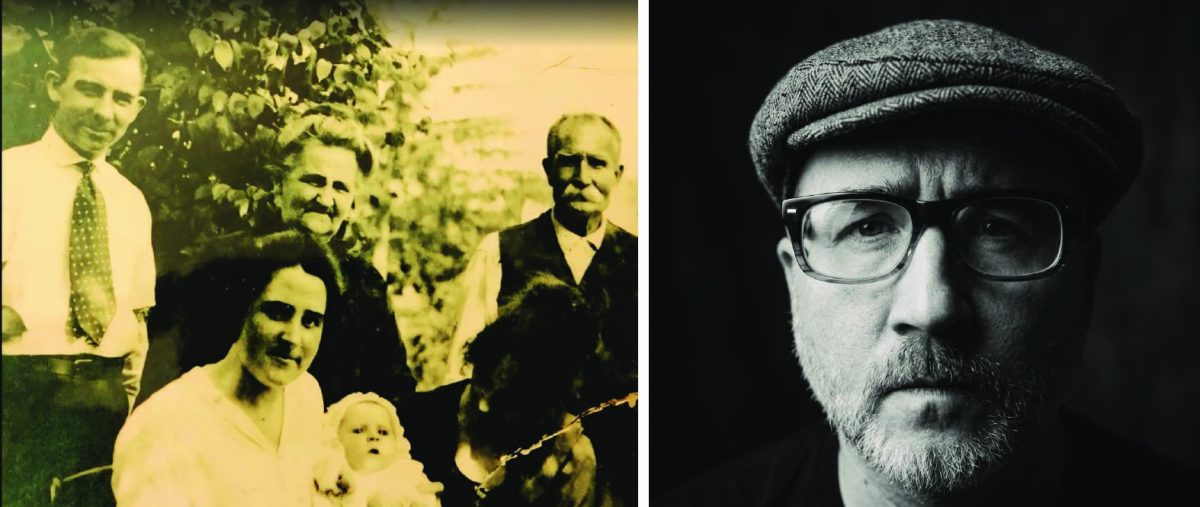
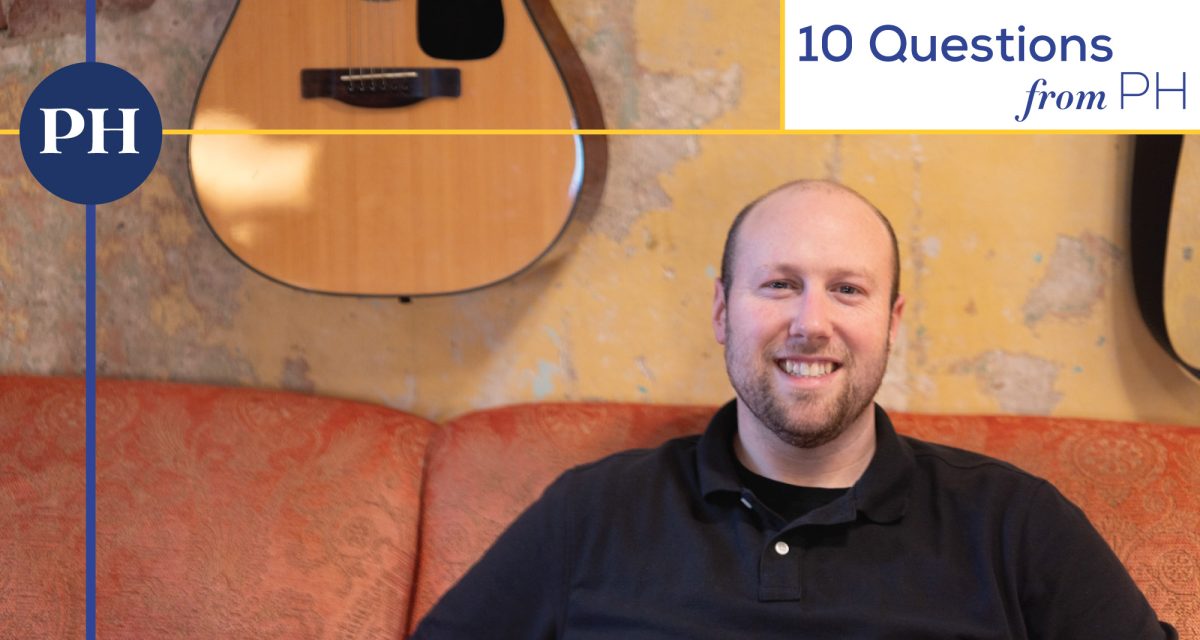
This edition of the series features music recording and mixing engineer Jesse Melito, 34, who founded Woodside Productions in 2015 and has lived in Peekskill six years. Outside the studio, the avid fly fisherman is a nature enthusiast who enjoys hiking and finding rivers to fish.
1. What is the job description of a recording and mixing engineer in the music industry?
My role is to capture the interaction between the music, the people, and the moment so that the song has the greatest emotional impact on the listener. My most valuable studio tool is my ears. I constantly listen and observe and ask myself questions like… Is this music having an emotional impact on me? Does the artist seem inspired by what they are performing and hearing? How is this sounding compared to how I think it should sound?
Sometimes it can be very technical. I use what I know about the physics of sound and the characteristics of recording tools to capture the music in a way that feels inspiring to me and the artist. Sometimes that’s moving mics in different positions or choosing different mics. Maybe we have to look into the arrangement of the song itself.
Other times it’s about the right atmosphere. Maybe the lights need to be dimmed or need to be further away, or sometimes everyone needs a lunch break and a cup of coffee. Perhaps some of these tasks would be that of a producer. At this level of the music industry, it is usually just me and the band or artist. If the moment is right, the people are feeling good, and the song sounds good, then we are making something inspiring.
When we talk about mixing, I consider it an enhancement of the original recording. It is a method of bringing forward the details and ensuring the song will have the greatest impact on the listener while satisfying the artist’s vision.We use certain tools to correct an issue, enhance something creatively, or both.
My favorite part of the process is the beginning. Hearing something for the first time is when you are most objective. We decide if the sounds we are hearing fit the music. We may try different instruments, amps, recording techniques, to get the sound we hear in our heads. We talk about the arrangement and then we focus on getting the best takes.

2. Why did you settle in Peekskill?
Peekskill has a certain charm about it. I enjoy how eclectic the art scene is and how passionate the people around here are about music and art. It also has such a rich history, which I feel has an impact on the artistry. There is inspiration around every corner, from downtown to the riverfront and hiking through Blue Mountain.
3. What kind of music is made in the studio?
I work with a variety of different styles of music at the studio, but there is usually one common thread; it’s mostly live instruments [as opposed to computer-generated sounds]. It kind of spreads through singer/songwriter to funk/R&B and pop to rock and hard rock, all of which use a variety of live physical instruments.
4. Who are some notable artists you’ve worked with?
Most of the artists I work with are community-based. We all kind of know each other and have relied on each other for one thing or another. Artists like Jake Albi, Paul Beladino, Zac Vanacoro, and Plane Station have held rehearsals and pre-production sessions in the studio. We have recorded and/or mixed projects for Zac Vanacoro, Plane Station, Christine Chanel, Alex Slomka, Anthony Gach and Harmonic Aggression, Smooch, Tim Feeney of Phineas and the Lonely Leaves, Dumb Echo, as well as many others.
I have worked on about 25-35 albums (full-length, EPs, singles), whether recording, mixing or both. I start working with an artist in the early stages of pre-production and continue through recording and then the final mix.
5. What equipment do you use?
The studio is mostly a digital recording space that runs on Avid Pro Tools and Apple Logic Pro. While the recording is digital, I prefer having a feeling of analog. The centerpiece of the studio is a Soundworkshop Series 24 analog recording console. Besides a console sounding good, preamps and EQ [equalization] and other processing is all within reach so you can get things happening pretty quickly.
6. What is your origin story for becoming a recording and mixing engineer?
I have had a love for music from a young age. My grandparents always had music on, everything from The Beatles to Mozart. Most of my early music influences came from my relatives. My grandfather and my uncle were drummers and hearing the tales of playing music really gave me the itch to be a musician.
I didn’t get the bug for studio recording until high school, when I knew I wanted to pursue music but didn’t know exactly what or how. I took a recording class at Mahopac High School and loved being part of the process, from song creation to the finished product. In my junior year, I visited SUNY Purchase. The music conservatory there was tough to get into and required a portfolio of work, including recordings. I did not have a portfolio but I had the dream and the drive.
In my late teens and early 20s, I worked a few regular jobs and eventually purchased my own recording equipment. I started recording myself and my friends in hopes of building a portfolio so I could get into the program at Purchase. Now, I am a proud alumnus of SUNY Purchase and its Conservatory of Music. I started Woodside Productions with the goal of growing my client base and establishing myself in the recording industry.

7. Which projects have been the most challenging, and which have been the most fun?
There’s one song that ended up being the most challenging and the most fun. When I started working with Plane Station eight or nine years ago, Nick Chiapparino, singer and guitarist, played me a song he had written called “Never Leave My Mind.” We put a band together, recorded it, even made a video for it, but it never really felt right.
During the initial recording, we had some trouble getting the groove to feel like it should and it just wasn’t happening. We tried playing it a few other times over the years and we all liked the song, but any recording we made we just didn’t love. Nick and I realized we both really like soft rock from the ‘70s and we thought, let’s give this tune a ‘70s soft rock vibe. It was the first time recording it in my studio on Division Street. I covered the drums in cloth to give them a dead sound and we recorded it completely live with drums, bass, and acoustic guitar.
It ended up being exactly what the song needed. We got it done in two takes. Sometimes, the time and space matters. The song literally took 10 years to make, but it is finally done, and feeling the best it ever has. It will be released this year. The making of this song was both challenging and rewarding.
8. How has the music business changed since you started in this profession?
The most obvious change is AI, which can make a song sound like anything you want within minutes, if not seconds, of typing a prompt. Most of us probably can’t even tell the difference. There are already AI mastering services and probably mixing services out there. I ask myself, is AI going to make inspiring music for years to come?
When I was young, I wanted to learn an instrument, play and create music with others because I was inspired by the music I was listening to. Can people lose that? Have we lost it already? I wonder why someone wouldn’t want to pick up an instrument and spend years or a lifetime working on that craft. It can be a never-ending adventure. Why would someone just pull up ChatGPT and ask it to write a song?
I am noticing a divide on this: some people think AI is great and others are resisting AI. That resistance has been pushing people to pick up an instrument, meet up with friends and create something authentic. It’s hard to know where it will all lead, but I am hopeful that AI will find its place in the world and not destroy the creative spirit all humans were built with.
9. What are your favorite music genres?
I listen to rock, jazz, pop, metal, depending on the day. I prefer listening to vinyl on a decent set of speakers. It’s more involved than just playing Spotify in your car or on earbuds, which makes you appreciate that time with a record a little more. A record slows things down for me. You can’t skip and it’s not portable, so it forces you to be still for a while. Active listening is something we should all practice, not just with music either. Music shouldn’t just be this noise that removes the silence. We should really hear it and let it speak to us.
10. Which instruments do you like to play?
You may have seen me behind the drum kit with several local bands. I also enjoy playing a variety of other instruments. I have played guitar or piano parts in several songs I have recorded for artists.