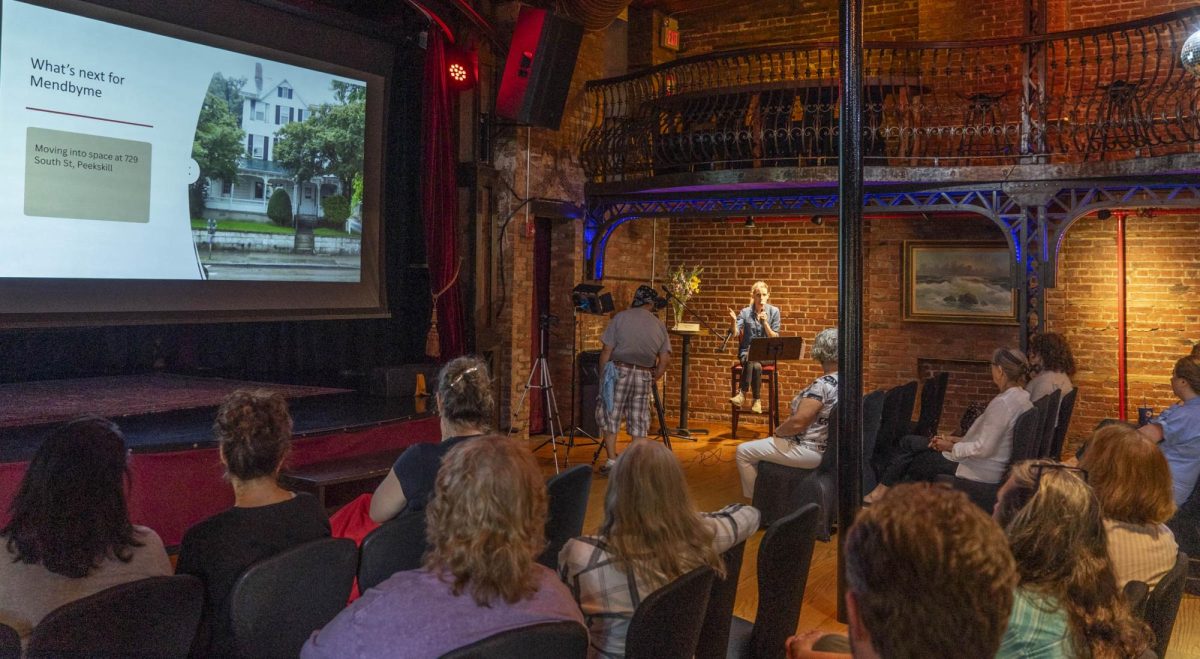


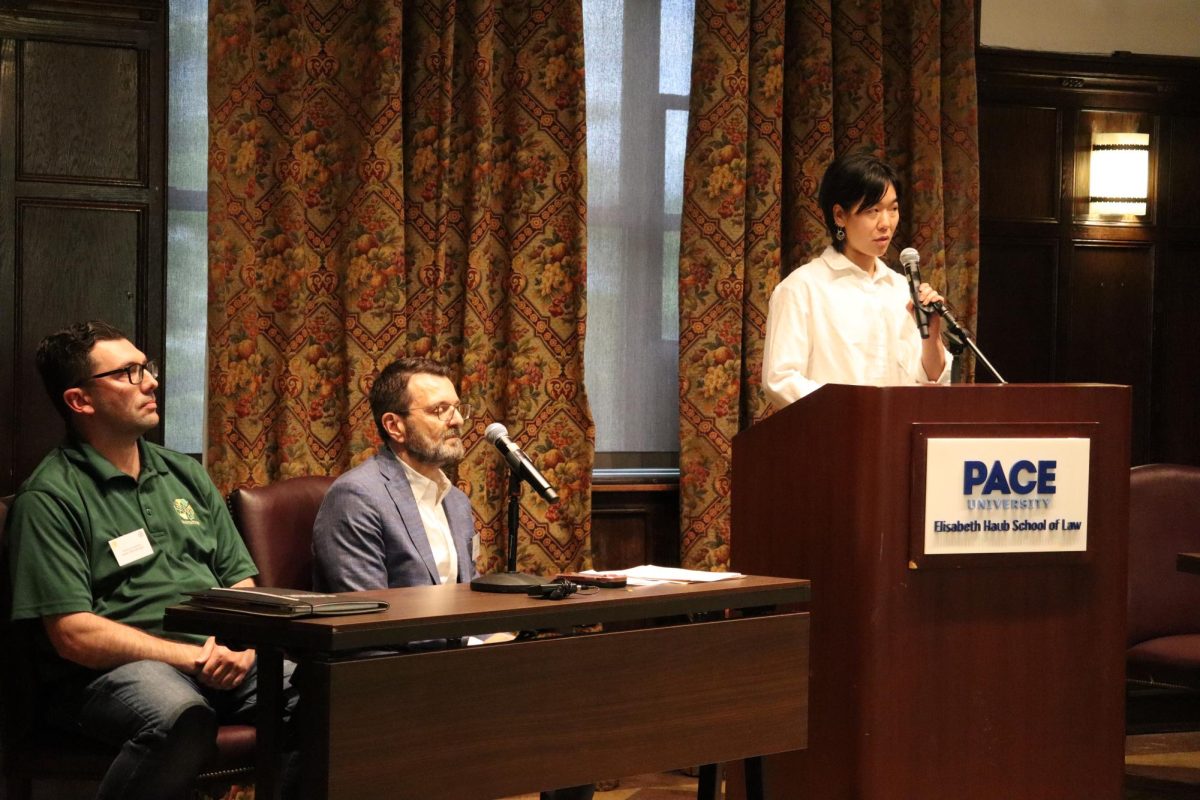

Municipal leaders, elected officials, business owners, sustainability advocates, and local residents gathered for a “Waste in Westchester Summit” at Pace University on Friday, May 15, to advance zero-waste solutions.
The day-long program was hosted by the Federated Conservationists of Westchester County, Sierra Club Lower Hudson Group, and Westchester Alliance for Sustainable Solutions (WASS). The focus was on solutions to waste problems and how to fund them, saving communities money in the process.

One of those ideas from WASS, an alliance of individuals and community organizations from across the county, is starting a conversation.
The environmental group, seeking to move communities to zero waste and end the county’s reliance on incineration, has rolled out a new initiative called the city-by-city approach in which the group will meet and work with municipal officials in an attempt to help municipalities reduce waste.
Courtney Williams, founder of WASS and a cancer researcher, shared information about the initiative to meet with municipalities and members of the Department of Public Works (DPW) during a presentation at the summit.
“We will come and have a discussion with your municipality and your DPW, your village manager about what’s going on with waste,” Williams said, adding the group will share information on solutions and sources of funding. “We could also hear from you about what you need or how we can help you, or how we can advocate with the county to get the solutions in place. We really want to work with you to kind of bottom up this solution and show our county-wide decision makers in the refuse district that these things are doable.”

Topics of discussion include basics of waste management, solutions to reduce or eliminate waste, cost savings from zero waste, draft legislation and toolkits, and funding for implementation.
Leila Goldmark, an environmental attorney in Croton and member of WASS, said the new initiative follows the release of the county’s $90,000 waste reduction study and petitions from WASS over the past couple years to hire zero-waste consultants. She said while she believed the county has good waste diversion programs, she would like to see it go further than that.
“We really do want to know more from the municipality perspective,” Goldmark told the Peekskill Herald. “Because we were hoping to have top-down leadership and helping [to] get municipalities on board and coordinated. But if the county is not giving us that leadership, we want to go bottom up. We want to go to the mayors, to the DPW guys, and say, ‘What programs are you really participating in? What programs are working for you? What programs are not working for you?’”

The first meeting of the new initiative was with the Village of Croton-on-Hudson, which has a population of over 8,300, and its mayor Brian Pugh. The meeting focused on budget constraints, educational campaigns, and ways WASS could support the municipality’s needs.
“My goal really in meeting with people first is to make friends and see how we can help them, because a lot of the issues at the local level are budget constraints, educational constraints,” Goldmark said.
In a statement to the Herald, Croton-on-Hudson Mayor Pugh shared how the meeting went from the municipality’s side.
“As the first community to receive this detailed presentation from WASS, the Deputy Mayor, Village Manager, Superintendent of Public Works, and I have all carefully reviewed their material,” Pugh said. “WASS’s advocacy supports Croton’s long-standing environmental agenda. Our team is actively looking into waste reduction across multiple fronts. That includes considering immediate measures like improved labeling on public recycling bins alongside comprehensive, long-term solutions, such as increasing participation in our municipal food waste composting program.”
Asked how WASS is determining which municipalities to go to, Goldmark said they are starting smaller to bigger. She said WASS has reached out to the City of Peekskill to have a meeting. Municipalities interested in WASS’s city-by-city initiative can email [email protected].
The new initiative reflects just one of many more efforts from groups and individuals at the waste summit.
A panel on legislative and policy frameworks for solutions was held between County Legislator Erika Pierce, Assemblyman Steve Otis, and Village of Irvington sustainability director Charlotte Binns.
Binns said since she came on board, she created a website with guides on how to create events sustainably, resources on where to donate things, and opportunities for diversion. The village also puts “game over shame,” having created trivia for where trash and recyclables should go.

“[The trustees] created recycling Jeopardy, which they do with seniors, and they do at various housing developments,” Binns said. “There’s anti-fast fashion upcycled fashion shows with the Girl Scouts. We just [collected] plastic bags and won a Trek’s bench for the school, the farmer’s market. There’s all these fun ways that we can engage.”
Closer to home, the City of Peekskill opened a 24/7 food scrap composting site over a year ago, shared Conservation Advisory Council President Jan Melillo.
“I think we’ve about quadrupled our collection of compost since that time in that short period of time by making it easier and more convenient for people to drop their compost off,” Melillo said.
Assemblywoman Dana Levenberg told the Herald one of the biggest pieces of legislation she is working to get passed is the Packaging Reduction and Recycling Infrastructure Act, which would require companies to incrementally cut the amount of single-use packaging waste by 30 percent over 12 years. Though not the prime sponsor of the legislation, she supports it.
“There is no doubt that plastic has made our lives much easier,” Levenberg said. “We have become reliant upon it. And there are certain instances, maybe, where plastics are still going to be the best use, but that is very limited. We know that the industry can do a much better job reducing the amount of plastic that they use for packing all sorts of products. And we know it because we’re starting to see the industry really change. We’re starting to see products that are packaged in recycled paper or upcycling materials.”
Levenberg also said the biggest thing everyone can do is to take responsibility for their own waste, such as using a cloth napkin multiple times before washing it in homes instead of tearing a piece of paper every time someone needs to wipe the corner of their mouths.

“We can do a better job at all levels with waste management,” Levenberg said. “And not to mention the emissions that are created when we have these burn facilitates. Many of them do capture the methane and try to use it as energy. They’re not perfect systems, so we have to continue to improve all of our waste systems, and certainly food scrap recycling is a great way to do it.”
The keynote speaker of the event was Kirstie Pecci, executive director of Just Zero, a national nonprofit working to implement “just and equitable” zero-waste solutions across the county. She recommended several ways communities can save money, reduce waste, and protect their health.
“Anything you buy in a store comes in a huge cardboard box. That’s where our cardboard load is,” Pecci said. “So anything your city or county can do to capture the cardboard, which is a cash cow, you should do. Not only should you be collecting the residential cardboard and keeping it clean and selling it, but get any cardboard that you can from the institutional, commercial, or industrial sector, and get that into a system. That is an immense money maker.”
An implementing solutions panel was also held between Hudson Valley Regional Council’s Liz Sun, Sustainable Materials Management’s Anthony Carbone, and Westchester County Department of Environmental Facilities first deputy commissioner Louis Vetrone.

“Since the last 20 years, last two decades, the county’s reduced the amount of residential waste that we dispose of by 27 percent, while the county’s population has risen 9 percent,” Vetrone said. “And that’s testament to all of your groups and what you’re doing out there in the communities, as well as the county programs working together. But of course there is a lot of room for improvement.”
Vetrone discussed the county’s recently released waste reduction study, which included recommendations for 10 waste reduction strategies to advance the county’s progress, including expanding organics management. He noted that the expansion of grass cycling, a method of handling grass clippings by leaving them to decompose on the lawn when mowing, has been positive.
“We collect about 80,000 tons of organic yard waste every year, and we transport that to compost facilities outside of Westchester County,” Vetrone said. “Now, that number is actually interesting, because it used to be about 120,000 tons a year. Because of the work of our education, we got the word out to landscapers, residents, and municipalities on grass cycling, multi-inplace practices, so that number is down from 120,000 tons a year to 80,000 tons a year that we manage.”