


Two years after a county-wide waste reduction study was commissioned, Westchester leaders say the results confirm the county is a leader in waste reduction.
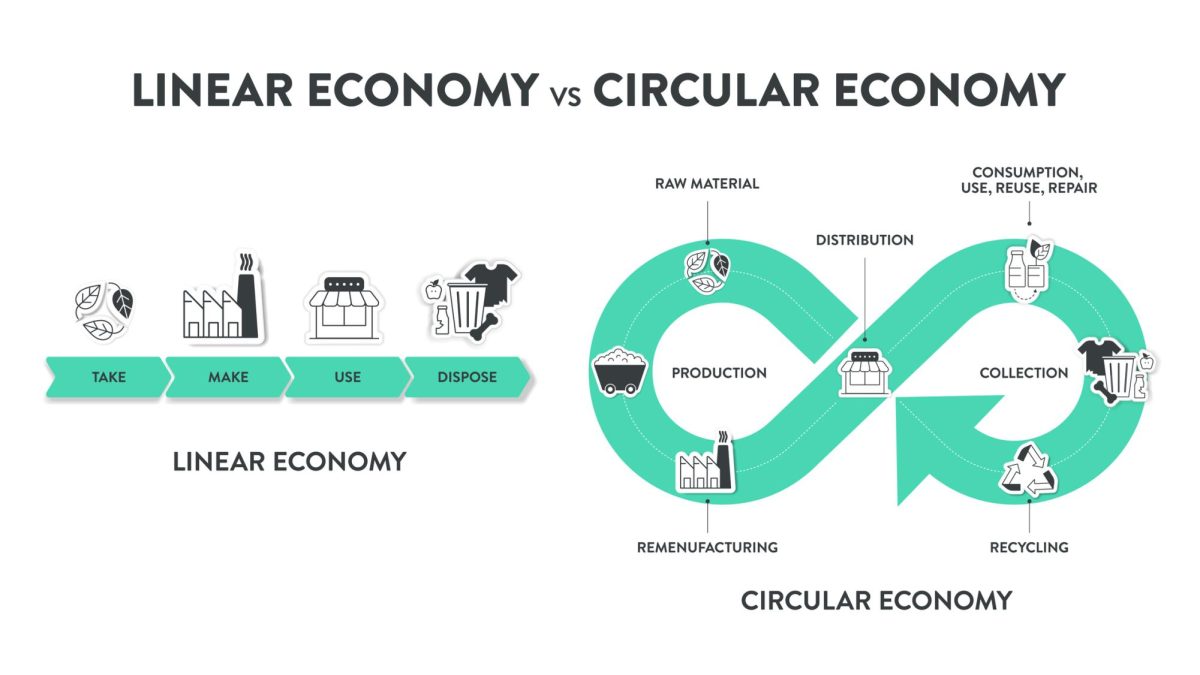
Barton & Loguidice, a Syracuse-based multidisciplinary consulting law firm, was selected to conduct the study after the county allocated $90,000 for it in 2024. The results, released on Feb. 17, outline a strategy to increase recycling, reduce waste, and advance a circular economy in alignment with New York State’s goal of achieving an 85 percent recycling rate by 2050.
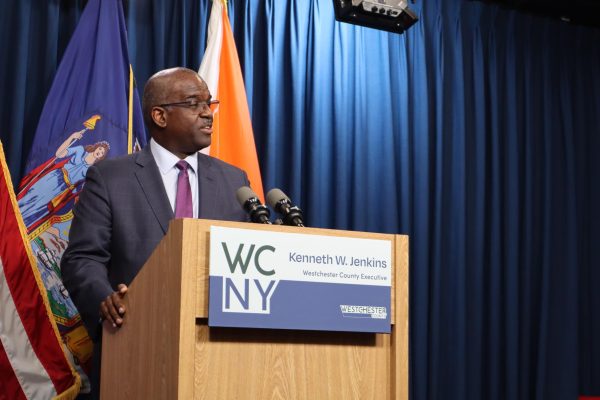
“Westchester County has long been a leader in environmental stewardship,” said County Executive Ken Jenkins in a statement. “This waste reduction study lays out a clear path forward, one that builds on our success, strengthens our partnerships with municipalities and businesses, and ensures we continue protecting our environment for future generations.”
The study kicked off in fall 2024 and was based on data collected from a variety of sources, including public surveys and listening sessions, discussions with Department of Environmental Facilities (DEF) staff members, and a review of relevant case studies from other areas. It incorporated more than 1,300 survey responses, community meetings, and written comments.
A total of 1,302 respondents participated in three online surveys geared to residents, commercial businesses, and municipal officials. About 23 percent of feedback came from the City of Peekskill.
Responses revealed the most common challenges and barriers to implementing waste reduction and circular economy initiatives were insufficient public awareness and engagement, lack of funding or budget constraints, and limited infrastructure or resources.
According to the study, some municipalities cited significant hurdles such as resistance to change from residents or businesses and a lack of technical expertise or adequate staffing.
The residential survey determined residents generally support waste reduction and recycling initiatives but encounter several barriers, including inconvenient drop-off locations, confusion about recycling guidelines, skepticism about recycling effectiveness, lack of awareness or information, inconvenient hours of operations, and transportation limitations.
The study recommends 10 major waste reduction strategies to advance the county’s progress, including expanding organics management, campaigning for recycling education, maximizing diversion from the commercial waste stream, and expanding and enhancing green purchasing opportunities.
At the Westchester County weekly briefing on Feb. 18, Vincent Kopicki, commissioner of the DEF, said the county is already performing a lot of the recommended actions but will now be able to enhance them. First Deputy Commissioner Louis Vetrone added some recommendations larger in scope will require state action, such as addressing packaging waste in waste streams.
“We’re going to put together an implementation schedule that’s going to be incorporated into our own local solid waste management plan,” Vetrone said. “That local plan gets reviewed and approved by New York State DEC [Department of Environmental Conservation], and that is going to be incorporated into our own local solid waste management plan.”
Asked if the 10 recommendations were planned to be included in the current budget, Jenkins told the Peekskill Herald there are not currently any additional plans for specific dollar amounts.
“We feel that we can utilize our current existing budget to be able to address those 10 things for waste reduction,” Jenkins said. “There’s nothing that gets us to zero. But we are going to continue to move forward on those 10 recommendations… inside of our current budget.”
The study noted that 60 residents used a form letter, initiated by local environmental group Westchester Alliance for Sustainable Solutions (WASS), stating they want the DEF to urge Westchester to move toward zero-waste goals and to promote the closure of the WIN-Waste waste-to-energy facility at 3 John E. Walsh Blvd. The latter was not in the scope of the study due to being a privately operated facility, the study said. The Westchester municipal tax parcel card lists the owner of the WIN-Waste property as the City of Peekskill Industrial Development Agency. [Editor’s Note > See Win Waste statement to the Herald on the study below]
Catherine Cioffi, communications director for Westchester County, said that the request for proposals for the study required Barton & Loguidice to evaluate available alternatives for waste disposal. The evaluation will review feasibility, implementation and operational costs, and environmental impacts, including the impact on greenhouse gas emissions.
Disposal alternatives include traditional waste-to-energy combustion, pyrolysis, gasification, landfilling, and anaerobic digestion.

WASS founder Courtney Williams, who created the aforementioned form, said she felt the study was a “swing and a miss,” questioning why the study excluded the incinerator, noting the county is in contract with the company that privately runs it to send waste to the facility.
“To do just a general waste reduction study was a kind of waste of time and money because a lot of what it takes to reduce waste is known,” Williams told the Herald over the phone. “Other communities have done it. We don’t need to study it and come up with brand new solutions. We can just look at what other communities have done and are doing to eliminate waste.”
Williams added that she was pleased the study named food scraps as a necessary solution to divert disposal and said WASS was looking forward to working with the county to make it happen. The City of Peekskill has its own food scrap composting site, which was gotten off the ground by the city’s Conservation Advisory Council, in part with help from the county.
According to the study, Westchester County achieves a recycling rate of at least 50 percent, surpassing the current New York State average of 43 percent. The study was made possible by a Board of Legislators initiative and was led by Legislator Erika Pierce, chair of the parks and environment committee.
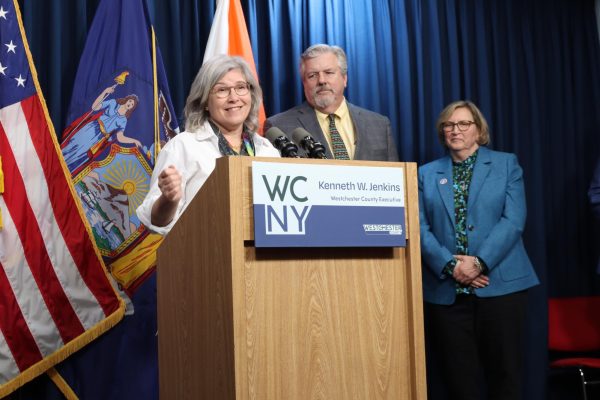
Pierce said the study detailed some of the steps the county has already taken, including her single-use foodware legislation to specifically reduce plastic waste, which was passed in 2023.
“Westchester procured a study on waste, food waste, [and] recycling in 2020, and it is my hope that these two documents together will help green-light a bright green path for our future efforts,” Pierce said.
To view the full waste reduction study, click here.
County Legislator Colin Smith and Win Waste Innovations Issue Reactions to Waste Study
In a substack article dated Feb, 24, Legislator Colin Smith, who represents Peekskill, said one of the most important things the study did was naming inequity, quantifying it, and treating it as a planning priority. He said Peekskill was not treated as a footnote and the study acknowledged Peekskill’s status as a New York State Disadvantaged Community. Smith also pointed out what he considers shortcomings in the study.
He wrote: “It is not a facility-specific emissions inventory for the Peekskill waste-to-energy plant. Its focus is waste reduction strategy, not a standalone evaluation of a privately operated facility’s full emissions profile. It also makes clear that facility closure is not something DEF [Department of Environmental Facilities] can simply decree, and it notes that even if the County ended its contract, enough waste from other municipalities could keep a privately operated facility running. It also states that closure advocacy was a common public theme while explaining that closure is outside the scope of this study because the facility is privately operated.
But that limitation should not become an excuse for inaction. If a community is burdened, then one of the most immediate ways to reduce that burden is to reduce the tonnage delivered into the disposal system. That is exactly where organics diversion, contamination reduction, and equitable access strategies become climate policy and justice policy at the same time.”
The following is a statement to the Peekskill Herald from Mary Urban, Director of Communications & Community at Win Waste Innovations…
“We appreciate Legislator Smith’s guidance and share a commitment to working collaboratively on complex local challenges. We support waste reduction, but even with best‑in‑class sustainability efforts, significant waste remains, and managing it locally through a well‑regulated facility avoids long‑haul trucking, supports energy reliability, and delivers better environmental outcomes overall.
“Even in a county with some of the highest waste reduction rates in the country, our facility plays an essential role by converting nearly 700,000 tons of waste into power for 38,000 homes. Without this local solution, that same waste would require more than 31,000 tractor-trailer trips to landfills in Syracuse or Pennsylvania.
“We are proud of the role we play and our strong record of operating within strict permit limits. In response to the state’s recent additions to protections for Disadvantaged Communities, we commissioned an independent third‑party analysis that confirmed potential GHG co‑pollutant impacts from the facility were less than 0.5% of NYDEC’s air quality standards, which are protective of public health.”