


SEE RELATED ARTICLE ON CHATEAU RIVE’S $1 MILLION WATER BILL
Figures from the Peekskill Finance Department reveal that the total amount of unpaid property taxes eligible for collection through foreclosure has climbed to nearly $4 million.
The city has not held an auction of properties foreclosed on for non-payment of property taxes since 2019.
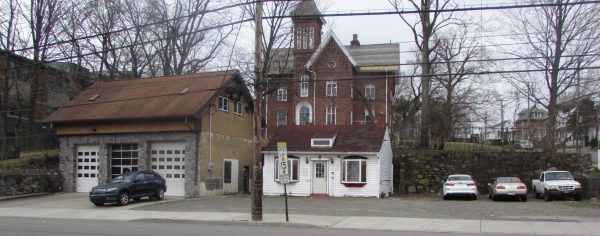
Properties are added to the in rem list after taxes are not paid for two years past the due date. Penalties and interest accumulate over time, increasing the debt owed. (In rem is a legal term of Latin origin, meaning action against a thing, such as property, or a person.)
Some of the tax debt listed last year no longer appears on the current list. Back taxes totalling $260,612 against the building at 104 S. Division St. listed last year is no longer shown. The taxes owed on 1412 Main St. have been reduced to $61,069 from $102,184 on the prior list. And the $55,278 tax bill against 3 Scofield Court on the prior list no longer appears on the new list.
However, the bill keeps rising on other properties. Past due taxes on the property at 231 Washington St., listed at $225,793 last year, now total $282,805. The property at 116 Lakeview Drive has past due taxes totaling $209,219 compared to $157,037 on last year’s in rem list.
And the taxes past due against the second-highest delinquent property owner continue to climb. 200 North Water St. Equities LLC, owners of three properties, now owes $749,272. The total owed last year on 200 N. Water St. was $252,186 for 2016-2021 taxes. That figure has grown to $358,107 for the tax years 2016-2021. Another $326,583 has been added for tax years 2022-23. The property owner of 846 North St. and 504 Smith St. now owes a total of $181, 028 on the two parcels, up from $136,429 previously.
All figures on the current Finance Department tax list include penalties calculated up to and including a March 31, 2026 date.
In Rem Property List 2016-2023
Adding More Delinquents to the List
The most recent new list of in rem properties covers past due amounts in the tax period from 2022 to 2023. That list totals $2,329,150. Almost half of that total comes against the owners of Chateau Rive (see related article).
According to city records, the Chateau Rive property owes $1,052,494 in taxes and penalties on the property at 1500 Fort Hill Road. Other additions include properties at 1070 Lower South St. ($103,707), 1130 Frost Lane ($88,420), 645 Washington St. ($84,328), 1014 Main St. ($74,935) and 147 Hudson Ave. ($38,127).
Other newcomers include 515 Nelson Ave. ($32,974), 132 South St. ($33,401) and 213 Waterside Close ($30,968).
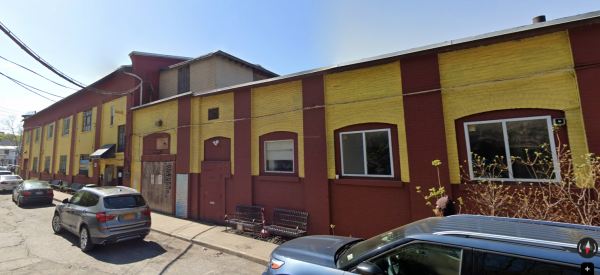
While the majority of properties on the list are occupied, many appear to be abandoned by the owners. Empty buildings are dotted throughout Peekskill, creating pockets of deteriorating structures that bring down property values and create a sense of urban blight.
The loss of revenue from uncollected taxes creates shortfalls in the city’s budget that must be made up by reduced spending on important municipal services and higher taxes for other property owners.
The City of Peekskill is also harmed financially each year when school property taxes aren’t paid. By law, for whatever school taxes are due, the city has to pay the school district from its own funds, and then collect those taxes to compensate for the money not received.
According to city figures, Peekskill collected $270,479 on interest and penalties on real property in 2024. The city budgeted for $658,900 in 2025 but collected only $265,349.
For the 2026 budget year, the city is projecting it will collect $975,000 in interest and penalties on real property.
A Complicated Procedure to Collect Unpaid Taxes
According to the Peekskill City Code, the comptroller can advertise for sale a tax lien on property for taxes not paid 12 months past the due date, or foreclose on tax debts and take possession of the property.
“Once in each year during the month of May or June, whenever any tax on lands or tenements or any assessments on lands or tenements for local improvements shall remain unpaid for the term of 12 months from the time the same shall have become liens on the real estate affected thereby, so as to be due and payable, and also whenever any water rents or other water charges in said City shall have been due and unpaid for the term of 12 months from the time the same shall have been due, the Comptroller may advertise the tax liens,” the city code reads.
Interest on past due property taxes builds rapidly at a rate of one and a half percent a month, and by state law interest penalties cannot be waived. Because the interest charges compound, the total tax debt can double in less than four years, making it likely that the “death spiral” of debt will never be paid by the owner.
In 2024, Peekskill officials indicated they hoped to start legal action against delinquent property owners in February 2025. With turmoil in the city’s legal department following the departure of former Corporation Counsel Michael Hartman, and the hiring of the law firm Keane & Beane to handle all legal matters, little progress was made.
In the first quarter of 2025, City Manager Matt Alexander told the Peekskill Herald that proper notice to property owners of the past due taxes would be provided by certified mail, regular mail, and publication in the newspaper, as well as posting in various city and county offices. After that filing, interested parties would be provided a period of no less than six months to answer and appear, prior to the City seeking an order from the Court.
“Thereafter, the City may seek to auction off some or all of the properties. Parties with an interest in the properties are encouraged to contact the City regarding potential options,” Alexander said at the time.
In New York state, the tax foreclosure process begins when the city files a petition with the court. The property owner must be notified and the petition advertised in a newspaper.
The owner can pay the lien and retain the property generally within two years after the date of the lien. If there is no response the court will declare a default judgment and the city can then take the property title or auction the lien. [Editor’s Note: One Peekskill attorney contends that “The lien on the property (City Code procedure) can be sold or auctioned without a court process.”]
The United States Supreme Court ruled in May 2023 in Tyler v. Hennepin County that municipalities may only keep the amount of the taxes owed if the property is sold. Any excess funds must be returned to the prior owner. Local governments in New York state now have to adjust their procedures to new state laws governing what they must do with proceeds over the amount of taxes owed.
City Manager Matt Alexander and the attorney for Peekskill did not respond to an email for comment.