

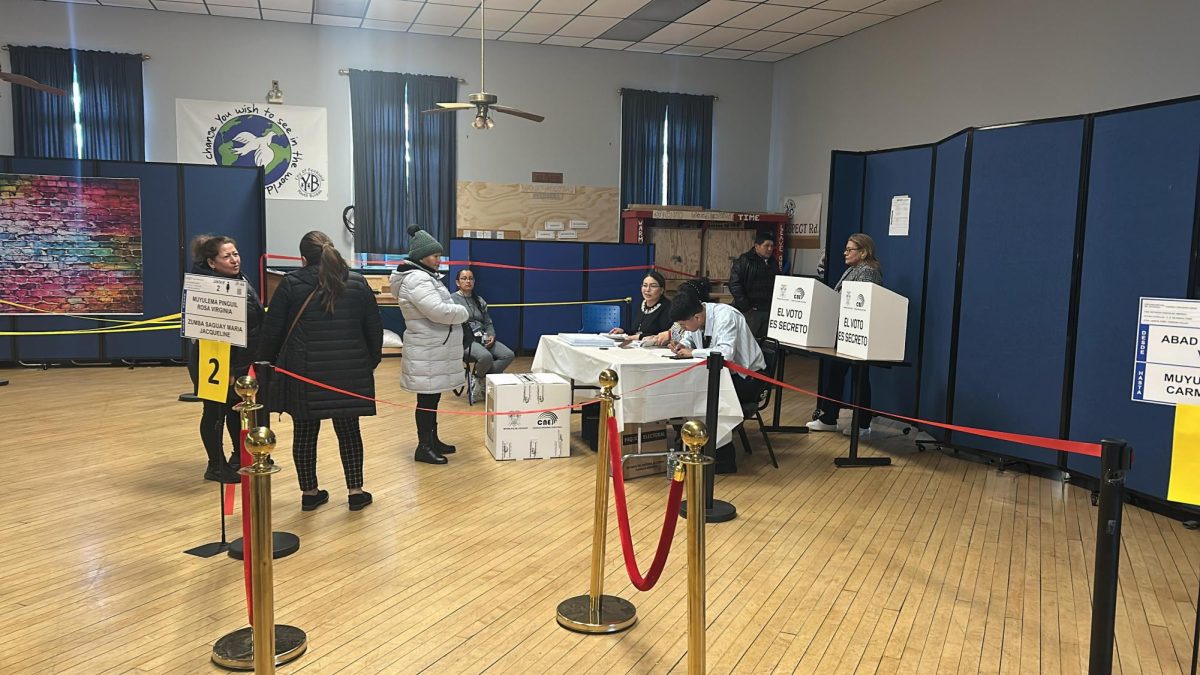

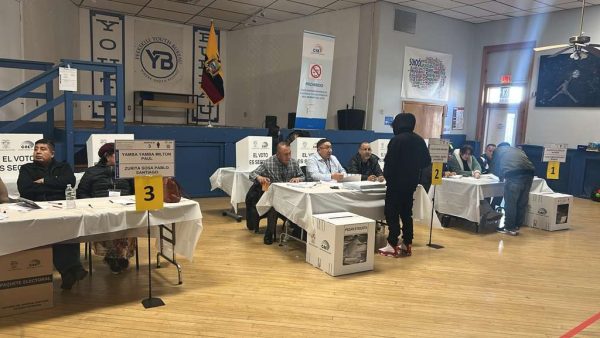
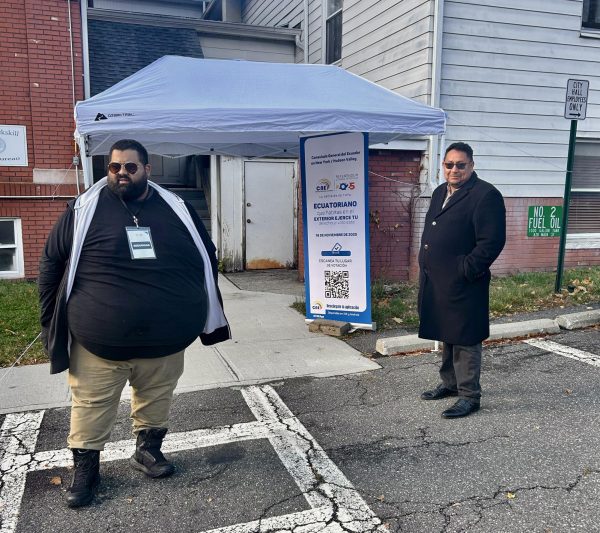
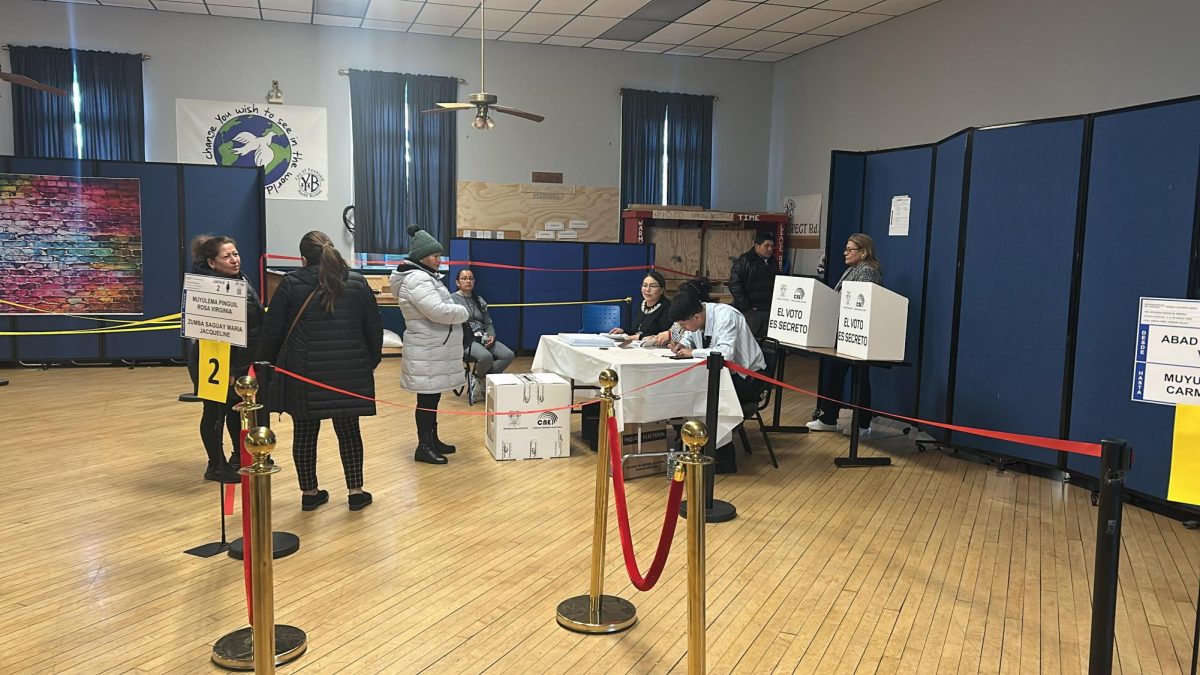
The sound of Ecuadorian national music filled the room. As soon as the polling station opened on Sunday, Nov. 16, to receive voters from Peekskill and surrounding areas for Ecuador’s 2025 constitutional referendum and popular consultation, the hallways of the city’s Youth Bureau filled with pasillos, sanjuanitos and albazos. Those melodies made many attendees pause, breathe deeply and remember with nostalgia. “We tried to bring a little of our homeland, at least through the music,” said Jorge Muñoz, delegate of the Consulate of Ecuador in New York and coordinator of the process in Peekskill. And it was true: for a moment, the room became a strip of homeland, a space where voting was not only a duty but also an emotional bridge to a country longed for even from afar.
Early on, Muñoz noticed something else: calm. He said that everything proceeded “normally, without incidents,” that the members of the four voting boards arrived on time and that the day advanced smoothly and without interruptions. But he also acknowledged that fewer people came compared with previous processes; that, at best, turnout reached 40 percent of the registry. Even so, the relaxed atmosphere made it seem as if everything was unfolding just fine.
It was nothing like Ecuador, where the dynamic was far more rigid: supervised ballots, strict control, military personnel watching every movement, and the constant reminder that cell phone use can result in fines or sanctions if anyone dares to take a picture during voting.
In Peekskill, volunteer Claudio López explained it almost with a smile. “Everything has been very calm at the boards. There have been no problems.” The serenity blended with the music, the low conversations and the smell of coffee some voters brought from home. It was cold outside, but inside there was rhythm and a soft echo that called people back to memories of home.
Among those who voted was Yolanda Parra, convinced that some of the questions could move deep fibers in the country. “There are urgent security issues,” she said firmly, “and also budget matters, expenses that are not worth it, like having so many assembly members.” Her vote was a gesture of hope, a way to influence decisions that will be discussed thousands of miles away.
Others did not feel that calling. Darío Guanca decided to stay out of the process this time. “It was not worth calling for elections for issues that the government should resolve without spending so much on voting,” he explained. His view reflected the fatigue many Ecuadorians feel, both inside and outside the country, after years of consultations, crises and political turbulence.
While in Peekskill the process moved at an unhurried pace, in Ecuador the day had another rhythm. In Quito, Guayaquil and Cuenca, polling centers were more crowded, with long lines, strict control, national media presence and oversight that leaves no room for improvisation. In Cuenca, for example, reports described step-by-step instructions for each voter, constant reminders about the phone ban and the formal, tense atmosphere that often accompanies elections. It was nothing like the almost domestic tranquility of voting abroad.
The questions in this popular consultation did not go unnoticed: security reforms, weapons control, extradition, reduction of state spending, changes in the structure of the Assembly. These are issues that shape Ecuador’s present, revealing a country seeking to contain violence, reorganize its institutions and lighten the weight of its state structure. Some voted with the conviction that urgent reforms are needed; others, like Darío, believe that decisions should be made without repeatedly resorting to the wear of electoral processes.
At 5 p.m. in Ecuador and 7 p.m. in Peekskill the polls closed and the count began, expected to conclude between 8 and 9 p.m. The first official data showed that the “No” vote prevailed in most precincts and questions. Only on Question C, which proposed reducing the number of assembly members, did the “Yes” obtain a slight lead, according to delegate Jorge Muñoz. In Peekskill there were 3,031 registered voters, of whom approximately 1,670 were men and 1,350 were women. Of that total, 551 men and 427 women voted, confirming the low participation noted throughout the day. At the global level, the National Electoral Council (CNE) reported that 470,636 Ecuadorians were authorized to vote abroad in three special districts with polling stations distributed across 37 countries.


![Esperanza Jimenez of Latin Hair Salon on Park Street. (Deb Liljegren]](https://peekskillherald.com/wp-content/uploads/2025/10/Lead-photo-9-1200x800.jpg)