


With new police leadership and ongoing immigration enforcement raids, several residents say now is the time for the City of Peekskill to codify its own policies about cooperation with federal immigration enforcement.
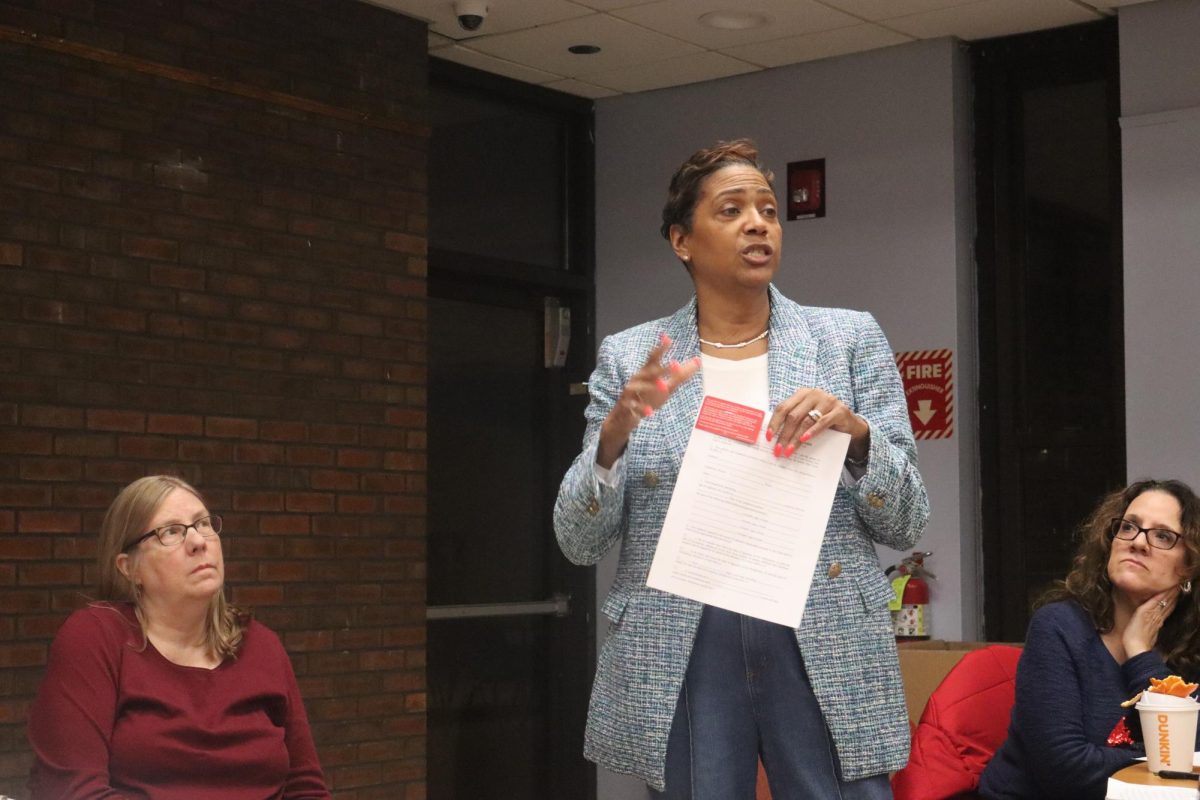
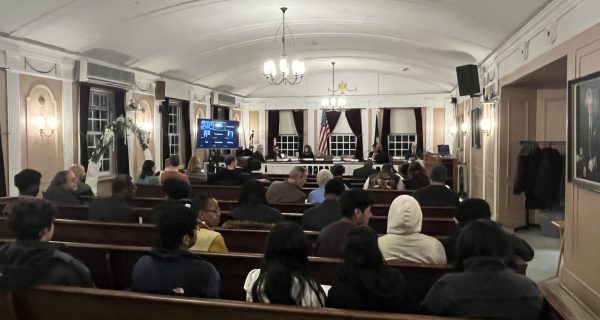
About ten speakers across the Nov. 24 and Dec. 8 Common Council meetings asked for transparency and a written city policy on how Peekskill police interact with U.S. Immigration and Customs Enforcement (ICE).
Resident Jan Melillo said that this past Halloween, she saw the number of trick-or-treaters decrease by more than half of the 400 she said she saw in 2024. She attributed this to neighbors’ and parents’ fear of ICE raids.
“It makes me sad to imagine them having to deny their children this simple joy of childhood,” Melillo said on Nov. 24. “And I know they have worse things on their minds, like who will take care of their kids if they’re picked up and sent to God knows where without them, but somehow Halloween brought their horror home to me in a real way.”
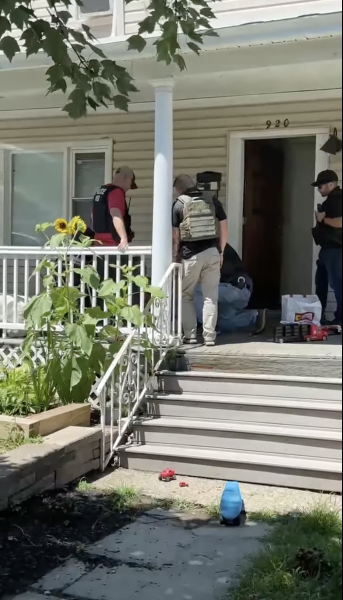
Peekskill Mayor Vivian McKenzie previously said she observed a similar occurrence of immigrants being afraid to be in their own city during a press conference on Aug. 11. It was held in support of Amy Lituma and her four-year-old son who were accepting voluntary deportation following a viral video of the two being detained by Homeland Security Investigations agents.
Several speakers on Nov. 24 advocated for Peekskill to pass a similar law to local Westchester municipalities to have a policy on the books prohibiting law enforcement or employees from enforcing federal immigration enforcement.
While city officials have previously said that Peekskill is bound by the Westchester Immigration Protection Act, which limits county resources being used in federal immigration matters, City Attorney Eric Gordon told the Peekskill Herald that the city is not bound by it, although it does follow it.
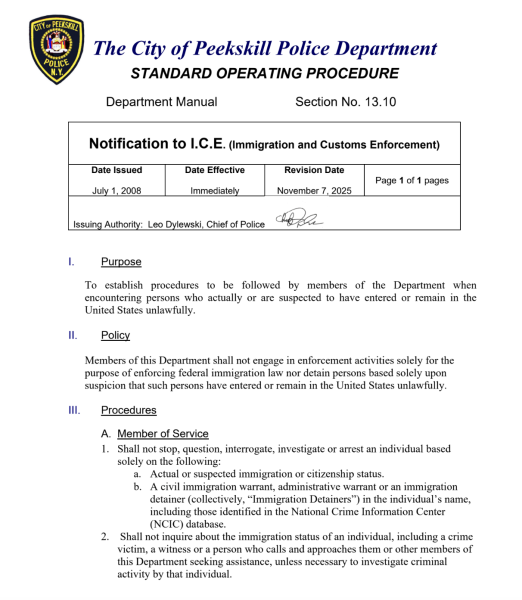
The City of Peekskill Police Department has said several times that it does not assist on ICE raids unless there is a court warrant signed by a judge and is only notified when ICE is in or exiting the city. In addition, the department has an internal policy prohibiting officers from enforcing federal immigration law.
Outgoing Chief Leo Dylewski provided speakers on Nov. 24 with a section of the department manual that states members of the department shall not engage in enforcement activities solely for the purpose of enforcing federal immigration law nor detain persons based solely upon suspicion that such persons have entered or remain in the United States unlawfully.
The standard operating procedure was issued on July 1, 2008, and revised on Nov. 7, 2025, with the issuing authority coming from Dylewski. Recently appointed Chief of Police Adam Renwick did not return an inquiry from the Herald regarding whether the policy would remain or be changed as of this writing.
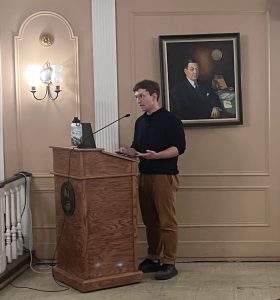
“Nothing will change when I leave,” Dylewski told speakers on Nov. 24. “Our rules and regulations for the department, we have made sure they are updated. They’ve been approved, and nothing’s going to change… I would not sit there and leave here if I thought that the City of Peekskill, the residents, the community, and my family would be in any harm or danger from us changing a policy.”
Residents Anne Jackley, Evan Rosen, and Dana Freedenfeld expressed frustration to the Peekskill Herald that it took several months for any type of policy to be shared with them. They’d previously had a meeting with city electeds and city officials in August where they challenged officials on the claim Peekskill was bound by the Westchester Immigration Protection Act.
(That meeting included Mayor McKenzie, Councilman Ramon Fernandez, several members of the Common Council and Chief Dylewski)
“We need something written for the City of Peekskill that bounds police by certain behaviors,” Freedenfeld said in a phone call. “It needs to be an ordinance, publicly available [and] transparent. Our population is 46 percent Latino and 27 percent are foreign born. That means that roughly one in three households include an immigrant family member.”
Critics of adopting such a local law say it could make the city a target for immigration enforcement raids while proponents say there is no hard evidence to support that.
Other local municipalities — the Village of Ossining, Village of Irvington, and Town of Pound Ridge — have policies on the books but were adopted prior to the new Trump administration, which has produced a spike in ICE raids and has pledged to “come after” sanctuary states and cities.
A now-removed list earlier this year “erroneously” listed Westchester County as a “sanctuary county” along with 35 states, cities and counties it said had policies impending federal immigration enforcement.
In a press release June 2, County Executive Ken Jenkins said the county does not willfully fail to comply with federal immigration laws and said no federal civil immigration laws require the county to enforce them.
“Westchester County has never identified as a ‘sanctuary county’ and fully complies with federal law,” Jenkins said. “To be clear, there is no legally recognized definition of a ‘sanctuary jurisdiction.’ Unfortunately, the federal government has used this term as a political sword—wielding it to strike fear, promote division, and engage in fear mongering, rather than addressing real issues with facts and fairness.”
Jenkins added that the county’s Immigrant Protection Act, which authorizes county law enforcement agencies to communicate with federal enforcement authorities investigations of non-immigration-related crimes, does not create a sanctuary for anyone involved in criminal conduct.
At the Nov. 24 meeting, outgoing Councilman Ramon Fernandez said he would support bringing a local law to Peekskill.
Mayor McKenzie, who said she was surprised to learn the city was not bound by the Immigrant Protection Act, said she understood concerns to make a policy more visible, but noted that there was a balance to be drawn. She said the city needed to have further discussions about the visibility of the policy and whether a new law was needed.
“It’s weird in the fact that we don’t want to bring too much to something because it draws ICE here,” McKenzie said. “But we also want people to feel that the police department does not execute those kinds of warrants and they don’t work with them.”