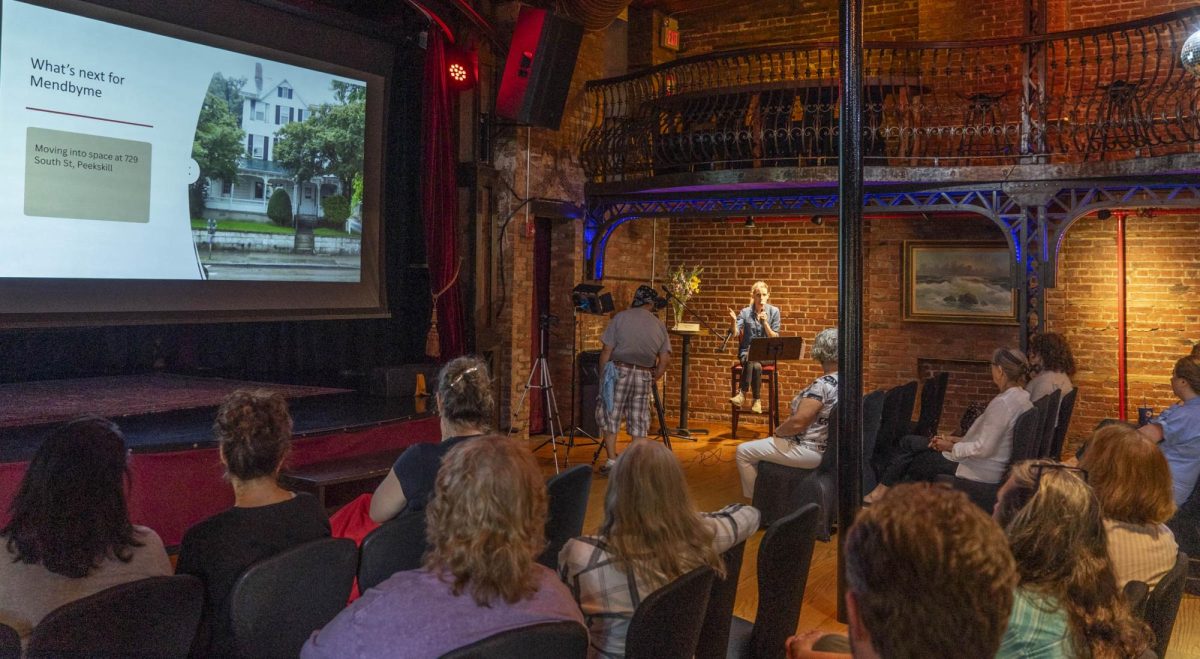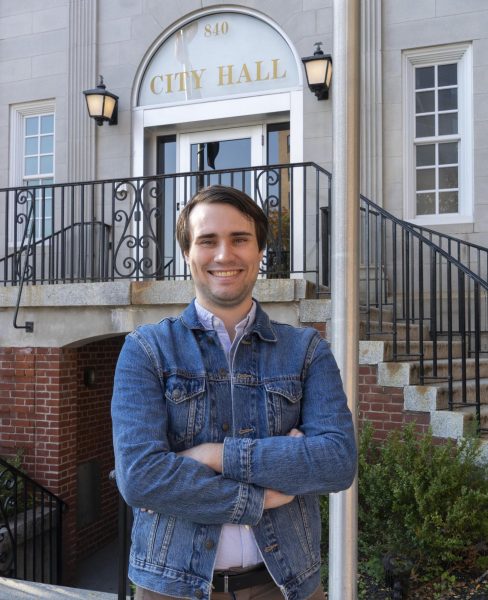


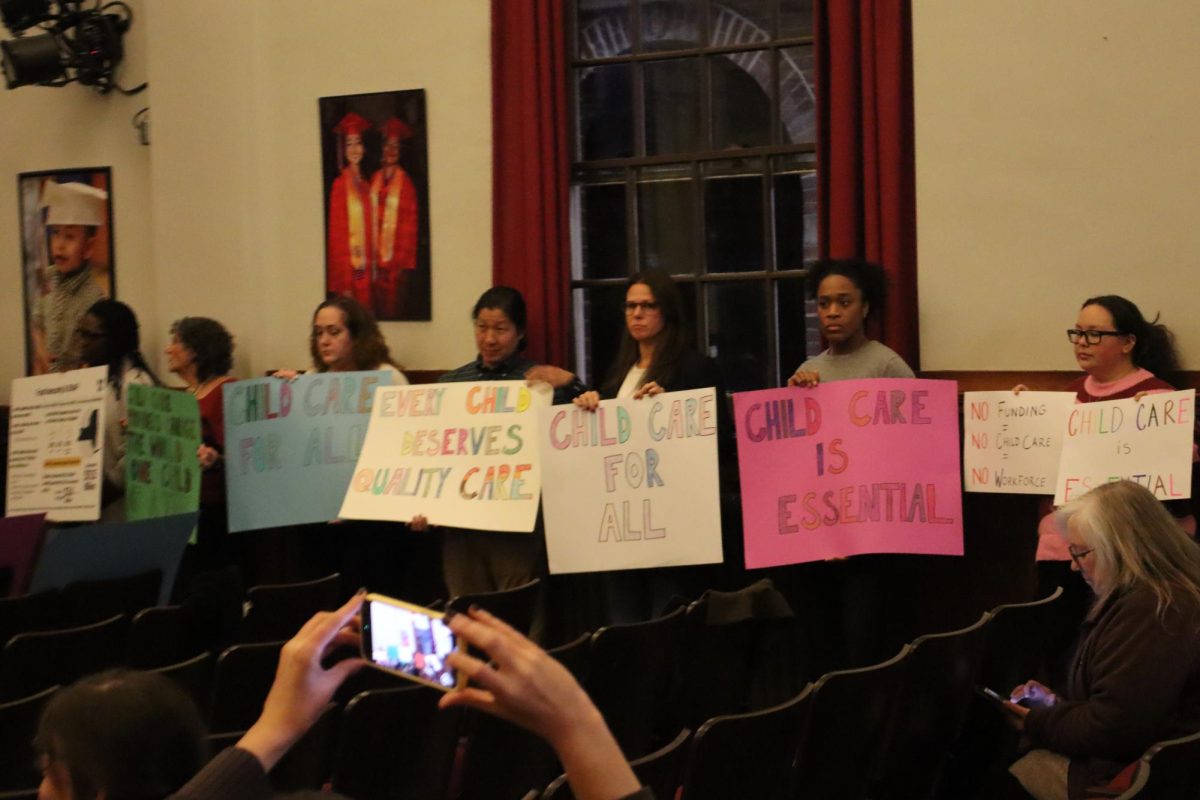

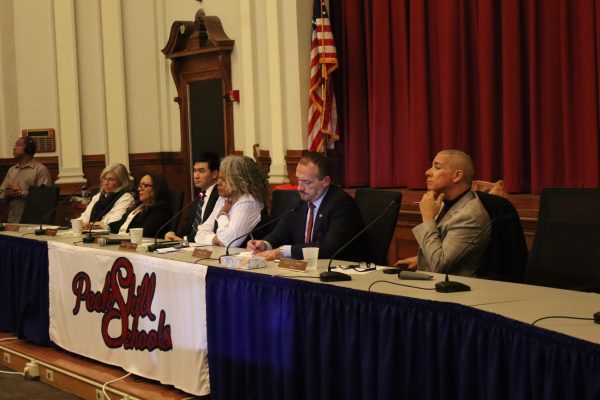
The first of two public input sessions on the Westchester County 2026 budget was held at the Peekskill City School District Ford Administration Building on Thursday, Nov. 13, at 6 p.m.
About 45 speakers addressed their budget needs and wants, including funding for childcare, the arts, museums, food insecurity, digital equity, domestic violence prevention and immigration legal services, and zero waste solutions.
County legislature officials listening to community members were Committee on Budget & Appropriations Chair Jewel Williams Johnson, Chairman of the Board Vedat Gashi, and legislators Colin Smith, David Imamura, Terry Clements, and Erika Pierce.
“We come together tonight at a difficult moment,” Williams Johnson said. “Federal cuts have narrowed the margin for error in our 2026 operating budget and the proposal before us does not include the board’s usual funding line for community based organizations.”
Residents request full funding of child care scholarship
One of the biggest issues of the night arose from a proposed 40 percent cut to the Westchester Works Child Care Scholarship, which helps working families afford care for their children.
About 25 speakers spoke on the topic, including childcare workers and board members, educators, and parents from Child Care Council of Westchester, Family Service Society of Yonkers, Westchester Children’s Association, Mount Kisco Child Care Center, Childcare Center of Ossining, YMCA of White Plains and Central Westchester.
Howard Milbert, executive director of Ossining Children’s Center (OCC) and co-chair of Westchester Early Childhood Directors Association, told legislators that the proposed $1.3 million cuts in scholarship would result in loss of funding for about 242 families.
“Childcare in Westchester is expensive,” Milbert said. “At OCC, infant care alone can cost over $30,000 a year, more than a year of SUNY tuition. What young family can realistically afford that on their own? The county scholarship has made it possible for these families to plant roots in Westchester. Without the support, many would simply not be able to stay.”
Ridvan Idara, founder and executive director of New Era Creative Space, an arts organization in Peekskill offering year long educational art enrichment to children and youth, advocated funding to the arts, noting she serves over 500 children a year who depend on scholarships to attend programs.
Idara told legislators that for many children arts is a survival tool, noting that there is a mental health epidemic among youth and that one of the leading causes of death among young people aged 10 to 24 is suicide.
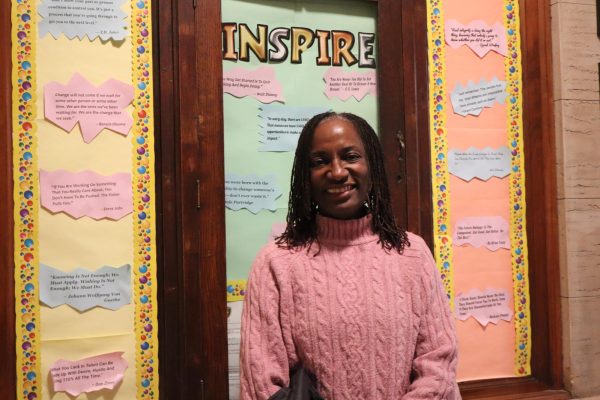
“The arts are a fundamental tool for emotional regulation and survival,” Idara said. “They provide the necessary language when words fail. They offer a non-judgmental space for students to process trauma, express their identity and find community. These become therapeutic anchors for young people. They build self esteem, reduce anxiety, and most importantly they foster deep, meaningful connections.”
Residents call for zero waste solutions over incineration
About seven residents urged the county to move away from burning trash at the WIN Waste Westchester waste-to-energy facility in Peekskill and toward zero waste solutions in the 2026 budget. Speakers, which included those from the Westchester Alliance for Sustainable Solutions (WASS), said the health of the community is being harmed by the incineration as a method of waste disposal, including higher rates of asthma.
Kathleen Barthelmes, a member of Peekskill’s Conservation Advisory Council, told legislators that the county needed to change the way it takes care of refuse, saying that burning garbage is neither green nor renewable. She recently worked to create a 24/7 drop off site for food scraps in Peekskill.
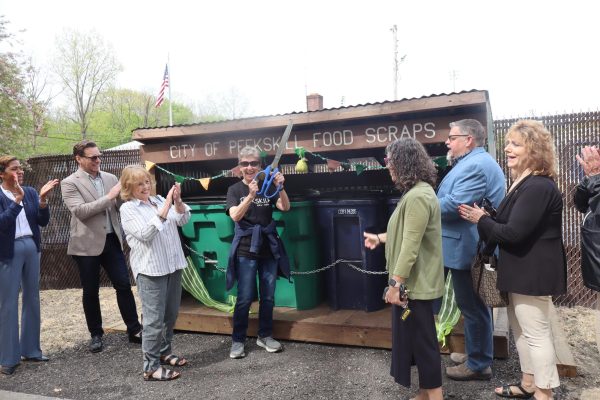
“We can’t just stop burning garbage. We need some other way to take care of it,” Barthelemes told the Peekskill Herald. “One way right now is to reduce the amount of refuse that goes to that incinerator. That’s why we got involved in the food scraps recycling. But that has to be everywhere and it has to be just one solution.”
Mary Urban, a spokesperson for WIN Waste, said in a statement to the Herald that that waste-to-energy is not part of the county’s pollution problem but rather the solution. She added the facility provides waste disposal solutions that reduce greenhouse gas emissions and traffic-related air pollution.
She said that by diverting waste from landfills, the facility helps prevent methane emissions and reduces traffic-related air pollution by keeping thousands of heavy-truck trips off the road. This, she said, is especially important as the Briarcliff-Peekskill Parkway (Route 9) alone carries approximately 35,000 vehicles each day.
“Waste reduction remains essential, and long-term efforts to reach more circularity are important and well-intentioned,” Urban said. “However, achieving those goals will take many decades per the NYDEC’s solid waste planning analysis. In the meantime, waste-to-energy remains a safe, proven, and sustainable method for reducing waste volumes and lowering greenhouse gas emissions.”
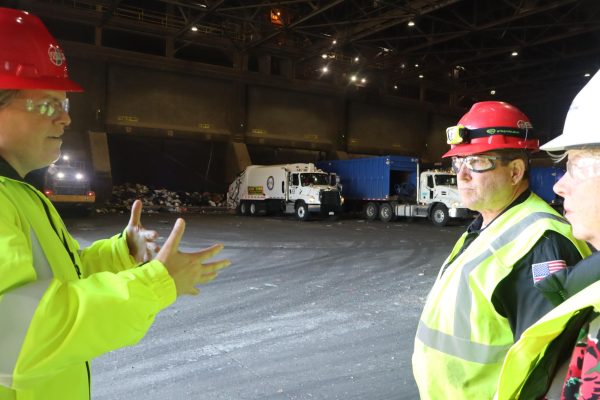
Earlier this year the county conducted a six-month waste reduction study, identifying waste reduction strategies for the next 10 years. A spokesperson for the county said results for the study are expected in December.
Residents advocate for food pantry amid food insecurity
Cynthia Knox, CEO of Caring for the Hungry and Homeless of Peekskill (CHHOP), addressed legislators about food insecurity. She said one solution to address food insecurity amid looming federal budget cuts is with CHHOP’s Fred Pantry, a farm-to-pantry food model serving over 9,000 individuals annually, as well as over 25,000 meals.
Knox was joined in support at the podium by CHHOP Board Chair John Smith and board members Ruth Wells and Kimberly McNair.
Fred’s Pantry serves around 100 to 125 families and over 400 individuals each week. The pantry saw a 10 percent increase in demand on Nov. 1 after SNAP (Supplemental Nutrition Assistance Program) benefits were interrupted due to the federal government shutdown.
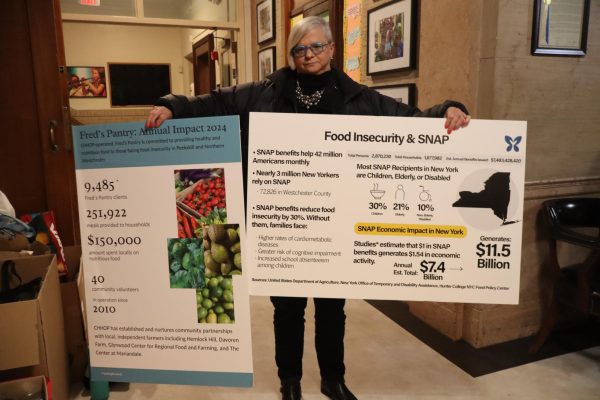
“Without healthy, nutritious food, people can’t thrive, children can’t thrive,” Knox told the Peekskill Herald. “And we’ve already seen what has happened with the suspension of SNAP cuts and the hardship that people have experienced. And we know that additional cuts and hardships are coming down the road. And it’s very important that we have places like Fred’s pantry to provide healthy, nutritious food to the community.”
The public input session adjourned at about 8:34 p.m. In her opening remarks, Committee on Budget & Appropriations Chair Williams Johnson told attendees that the night of testimony will help legislators negotiate and reshape the budget with eyes wide open about the human impact.
A second public input session was held on Nov. 19 at the Daronco Town House in Pelham. A public budget hearing will be held on Tuesday, Dec. 3, at 7 p.m., at the Board Chamber, 148 Martine Avenue, 8th Floor, White Plains. The Board is slated to vote on the final budget on Dec. 8.