


[Editor’s Note: This is the second of a three-part series written by Peekskill resident Alex Hanson exploring what is contributing to the country’s housing crisis. Hanson is the owner of Kreder Hanson Enterprises, a consulting company that provides project management services, business operations support, strategic planning, and policy solutions to businesses and organizations that develop and preserve affordable housing.]
The U.S. housing crisis is multi-layered and complex. Ultimately, we haven’t built enough of the right type of housing in the places where that housing is needed. This demand mismatch is the result of decades of policy decisions and financial forces that have shaped the country’s current housing landscape.
Underpinning all of these decisions has been a largely unspoken tension in the U.S. housing system between housing-as-shelter and housing-as-commodity. The term “housing market,” which is commonly used to describe the housing system in the U.S., speaks volumes about the ways in which our system prioritizes the economic value of housing over its role as safe and stable shelter.
A byproduct of framing housing as a commodity to garner wealth and financial stability – especially in the absence of a robust social safety net – is that it creates incentives for residential property owners to pursue policies that protect the value of their properties at the expense of housing as affordable shelter. Even though the type and amount of housing produced has regional and even national impacts, housing development is overwhelmingly decided at the local level through zoning ordinances, local boards and commissions, and by local municipal officials. This system of local control concentrates power in the hands of people who often have an incentive to maintain and increase the value of their own properties, shaping municipal landscapes in ways that do not account for the housing needs of the broader population.

New York is a home rule state, which means that municipalities are free to pass any laws that do not contradict state law. Zoning ordinances are municipal laws that dictate what can and cannot be built on land within that municipality. While they are not inherently exclusionary, zoning ordinances function as a central tool for municipalities that want to restrict development.
Exclusionary zoning either outright prohibits certain types of development (such as multifamily) or has provisions that are so restrictive (such as requiring minimum lot sizes or height limits) that development of anything but single family homes is impossible. Despite efforts that date back to 1968 to reform local exclusionary zoning ordinances, New York State currently has no laws limiting local power over land use decisions that govern residential development. A 2020 report by The Furman Center concluded that “New York stands nearly alone among its peer states in permitting its suburbs to restrict growth without regard for regional needs.”
As journalist Jerusalem Demsas details in On the Housing Crisis, engagement around local housing development is asymmetrical, heavily favoring those who oppose new housing. As participation in local politics is limited, a few outspoken voices can profoundly impact whether a proposed housing development moves forward.
Local homeowners who perceive immediate harm can fairly easily identify each other and come together in opposition. Conversely, beneficiaries of such projects are generally unknown at the time of their proposal, making the kind of counterbalancing support that would help move projects forward significantly harder to organize. As Demsas outlines, affordable and even market rate multifamily development is often viewed as a threat by those who are most active in the local land use process, with the slow grind of the approvals process diminishing or killing proposed projects and discouraging developers from bringing other projects forward altogether. As a result, less housing gets built overall, raising prices for everyone.

In a system of local control, there are multiple ways that real estate owners can become active in the housing development process. Securing positions on elected or appointed local councils and boards that oversee the local development process is one such method. These bodies have control over zoning variances, special use permits, planning approvals, and payments-in-lieu-of-taxes (PILOTS) that developers need to build housing.
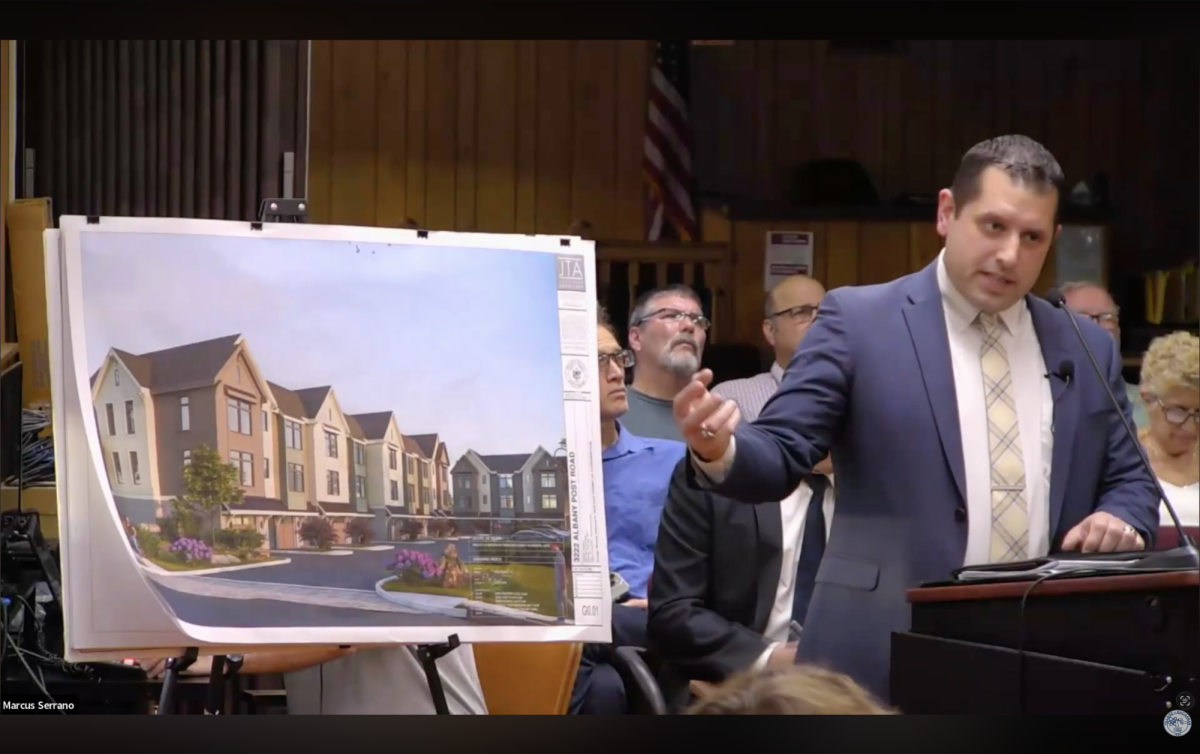
Community members can also participate in the land use process by speaking at public hearings or directly contacting local officials with their opinions on proposed local developments. In the most extreme cases, community members can file lawsuits in an attempt to keep projects from moving forward. Even if the project ultimately proceeds, these suits can delay projects for years as the legal process unfolds and add substantial costs to development through both legal fees and the cost of holding the property during the litigation period. They also send a strong message to other developers that development is not welcome in their community.
Westchester is a microcosm of local control over housing development driving the larger affordable housing crisis. Westchester County is comprised of 48 municipalities – including cities, towns and villages – each with its own zoning code and land use regulations. By several measures, Westchester – along with Long Island – has some of the most restrictive zoning in the country and builds far less housing when measured by building permits per capita than its peer suburbs.
In 2019, Westchester County undertook a Housing Needs Assessment that identified a shortage of 11,700 affordable housing units. The need has only deepened since then as the median sale price in Westchester rose 41 percent between 2019 and 2024, from $660,000 to $930,750. Despite the growing crisis and clear need for more affordable housing, Westchester’s elected leaders, along with municipal leaders from across the state, voiced overwhelming bipartisan opposition to a 2023 proposal by Governor Hochul to build 800,000 homes throughout the State over the subsequent 10 years.
The Governor’s Housing Compact would have required municipalities across the state to increase their housing supply by targeted goals of 3% downstate and 1% upstate every three years, as well as allow for greater density by public transit. Failure to meet these goals would have resulted in a fast-track process for development that would have overridden local zoning ordinances. The proposal ultimately suffered a bipartisan defeat by suburban officials across the aisle, with a rallying cry for maintaining local control.
This is not to imply that all local engagement in the development process is self-serving or unwarranted. Many individuals serve on local boards and commissions from a place of service and desire to give back to their communities. New development can spark legitimate questions about ensuring local infrastructure has the capacity to serve new residents, or that the expanded tax base from local development is sufficient to provide necessary municipal services.
Lack of community input can also have devastating consequences, as was seen in the mid-20th century when the powerful and influential urban planner Robert Moses bypassed local governments and razed multiple neighborhoods – disproportionately affecting communities of color – in service to his large-scale, often car-centric projects.
But opposition to the full-scale razing of neighborhoods and opposition to a multifamily apartment building proposed a few blocks from a Metro North station are not the same thing. Concerns about infrastructure capacity or whether tax revenue can adequately support necessary services for new residents may reflect a genuine desire to find workable solutions or they can serve as a thinly veiled pretext for blocking unwanted development.
Unrestrained local control has been a major contributing factor to the crisis we are experiencing today — a severe shortage of affordable housing, declining quality of life for those struggling with housing costs, and a growing drag on the regional economy. In the 10 years preceding the Housing Compact proposal, New York created 1.2 million jobs but only 400,000 new homes. The math just doesn’t work. Downstream impacts of the housing crisis are an outmigration of households that can no longer afford to live here and local businesses struggling to find workers, including those who provide essential services. A recent report by the Regional Plan Association found that if Westchester does not make sustained efforts to address its housing gap, it is on track to cost the County between 8,400 and 12,000 annual jobs and $32 to $57 billion in Gross Domestic Product over the next 15 years.

However, the tide may be turning. With the severity of the national housing crisis growing each year, entrenched local control of development is starting to shift. In recent years, multiple states have passed reforms to promote housing development and limit the ability of local municipalities to exclude certain types of development through zoning ordinances. Governor Hochul’s 2023 Housing Compact proposal drew from some of these recent initiatives passed by other states to curb exclusionary zoning practices at the local level and promote increased housing development. While the Compact did not succeed legislatively, it was a bold acknowledgement that the current system is not working.
Bringing oversight of housing production to the state level by setting parameters for what is permissible in local zoning codes would allow our elected leaders to craft policies that account for a much broader range of housing needs. It is one step toward creating a system that better balances the tensions of housing as commodity vs. housing as shelter.
It would move debate away from individual projects and into the realm of regional housing needs. In many ways it would also make housing production more democratic, allowing more voices to be heard than the asymmetric participation that characterizes our current system.
Municipalities would still have authority over much of their local zoning, but not to the extent that they could simply block all development or only allow single family homes. Our current system of local control has proven that it is incapable of meeting the housing needs of the broader population. Our neighbors, our communities, and our State are suffering as a result. It is time we consider new approaches to housing that meet a wider range of needs and allow for a much broader spectrum of individual and community flourishing. Loosening the grip that local control has on housing development is one meaningful first step.