



Three weeks of testimony – followed by four days deliberating behind closed doors – brought jurors in the Hasseem Jenkins murder trial back to where they started.
Jenkins murdered social worker Maria Coto, and no explanation or excuse could change that fact.
Coto, 56, was kicked in the head on May 14, 2024, in an apartment behind the deli at 900 South Street by Jenkins. Jenkins repeatedly claimed after his arrest that the PCP he was high on was responsible for his actions.
Jurors sent more than a dozen notes over the four days seeking clarification on what the law considered intent and responsibility. In the end, their verdict declared that Jenkins alone caused Coto’s death – not the drug – rejecting his attorney’s theory of “involuntary intoxication.”
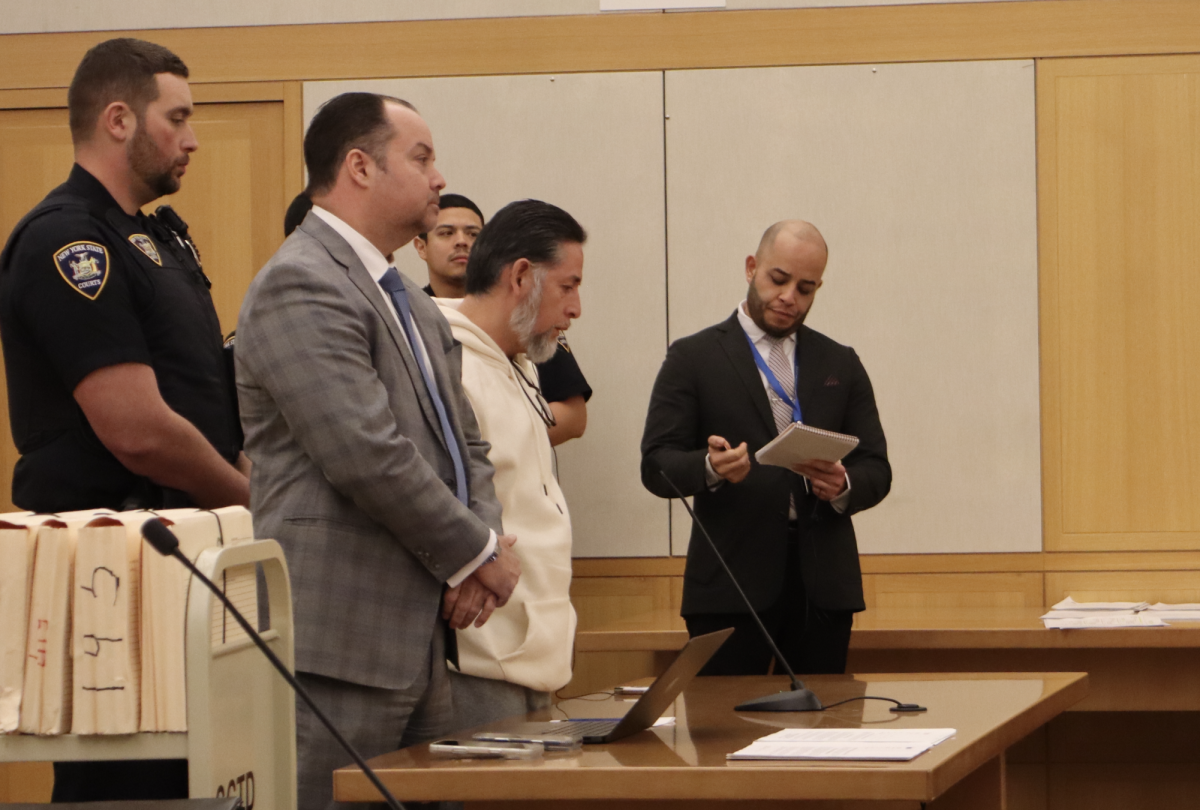
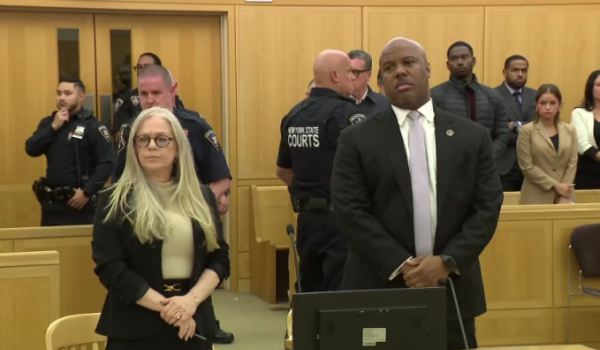
The jury foreman read one by one the guilty verdicts in the late afternoon of Nov. 5. When the jurors were polled, they each delivered their individual vote in a firm voice, revealing no emotion.
After the verdict was read, the silent courtroom of packed spectators emptied quietly into the hallway. Coto’s many supporters gathered in small circles, with Westchester County Trial Division Chief Nadine Nagler and Assistant DA Kevin Jones, expressing their thanks through sad smiles, some tears, and hugs. Peekskill police officers who arrested and investigated Jenkins were also there to see their case through to the end and comfort the Coto family members. Detective Fabian Gonzalez, who interrogated Jenkins the day of the arrest and led the Peekskill Police Department investigation of the case, was thanked by Coto’s family and supporters.
Jenkins’ mother and other family members huddled down the hallway with defense attorney Angelo MacDonald and quietly discussed the outcome, and what might happen next.
Jenkins was convicted of second-degree murder while committing a felony burglary, first-degree manslaughter, first-degree robbery, first-degree burglary and third-degree possession of a weapon. Jurors voted not guilty on the top charge of second-degree intentional murder.
Throughout the month-long proceedings that began Oct. 15, both jurors and spectators could be seen at times visibly red in the face with watery eyes or crying. Horrific police bodycam videos of Coto lying face down in pools of blood were played several times during the trial.
MacDonald presents ‘involuntary intoxication’ defense
During Oct. 29 closing arguments, Trial Division Chief Nagler played a phone call recording in which she said Jenkins could be heard shouting, “Give me your fucking phone, bitch,” “fuck that bitch,” and most damning, “I’ll kill you.”
Nagler described the case as simple, saying Jenkins was caught at the scene with blood on his hands and clothes beside Coto’s battered body. The intent, she said, was clear when Jenkins said, “I’m going to kill you.”
Jenkins’ attorney Angelo MacDonald argued in his closing statement to the jury that intent was not present in the murder due to Jenkins being high from smoking PCP. He told jurors that the government was grasping at straws to find a motive to make sense of Jenkins’ behavior.
“It was PCP and it’s as simple and plain and reality as it possibly could be,” MacDonald said, invoking an “involuntary intoxication” defense in which he said individuals have their ability to commit acts of intent negated and are the “recipient of a demon that is put into your system.”
He claimed that Jenkins was involuntarily drugged with a cigarette that was laced with PCP. He argued that in Jenkins PCP mind, he became aggressive and paranoid toward a stranger at his door waving papers and appeared to be attacking him in a room that was dark.
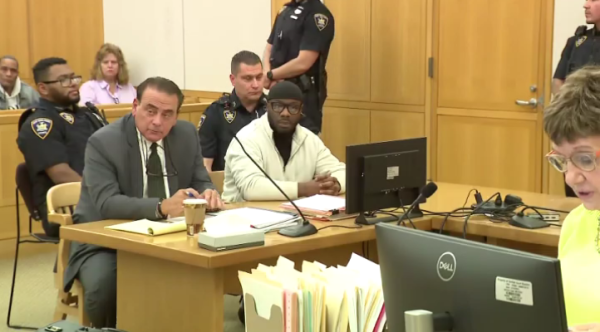
MacDonald also criticized the claim that Jenkins, who was behind on his rent and had not completed paperwork for Section 8 eligibility, targeted Coto because he thought she was a county social worker. He said there was nothing on her bag or binder to indicate she worked with the county and raised doubts that Jenkins would have seen her ID badge displayed in a lanyard around her neck.
MacDonald played body camera footage of Jenkins being escorted away from 900 South Street to a holding room in the Peekskill Police Department in which he repeatedly asked, “What happened?” and “What did I do?” The attorney argued this showed there could be no intent since Jenkins “blacked out.”
Jenkins’ recollection of events during his interrogation hours after the assault was Jenkins trying to make sense of the events and the blood on his boots, MacDonald argued. He pointed out that Jenkins said, “I grabbed her by the hair or something” and “I think I kicked her or something.” This, MacDonald said, showed Jenkins was attempting to put things together.
“Justice is not revenge,” MacDonald told jurors. “It’s not hate. It’s not punishment.” He added that justice is not helping the government when it “fails” to live up to its burden to provide evidence, and that the moments of regret individuals have do not define who they are.
Nagler says being high not ‘free rein’ to murder
Nagler argued that it did not matter if Jenkins was high and that people act intentionally while on drugs all the time.
“Being high is not a free rein to go out and do whatever you want and then say, ‘Oh, it wasn’t me, it was the PCP. So I guess I can get away with it,’” Nagler said in her closing statements.
Dr. Chirag Gandhi, director of Neurosurgery at Westchester Medical Center and Chair of Neurosurgery, testified that Coto’s brain injury from the attack was “catastrophic” and said that they would have been unable to save Coto even if the attack occurred in the medical room itself, Nagler said.
Nagler said Jenkins referenced the suit Coto was wearing and called her “high salary.” In addition, she said when a neighbor pleaded with Jenkins to stop his assault, he told her he could do the same to her.
Nagler said that intent does not require premeditation and can exist in the very moment. She said that Jenkins intended to kill Coto when he used the strongest part of his body, his legs, to stomp on Coto’s head, the most vulnerable part of her body, all while cursing and calling her names.
“He beat her and she died,” Nagler said.
Nagler critiqued Jenkins’ “evolving story” in the interrogation videos. Jenkins initially denied smoking PCP and said he didn’t know what PCP was, then later said he smoked it recreationally. He also changed the story of where he got the cigarette and whether he smoked it at his uncle’s house or not. Nagler said Jenkins was looking for excuses and beginning to formulate a defense.
She also said the defense could not claim a drug induced blackout while Jenkins was remembering details like Coto waving papers, that she was small, grabbing her by the hair, kicking her, and seeing blood.
Prosecutors said that after Coto was let into the apartment, Jenkins began his vicious assault and chased Coto down into the second apartment when she tried to flee, running past neighbors who pleaded with him to stop.
Nagler said the 911 call made by Coto provided evidence for both what Jenkins did and why. Nagler said that during that phone call Jenkins said, “This bitch dead” and the proof of intent could not be much bigger than that.
“Maria doesn’t need your sympathy. She needs justice,” Nagler told jurors, adding that it was not Jenkins’ family or the hospital facility or PCP that killed Coto, but Jenkins alone. “Tell him with your verdict. You, Mr. Jenkins, did this.”
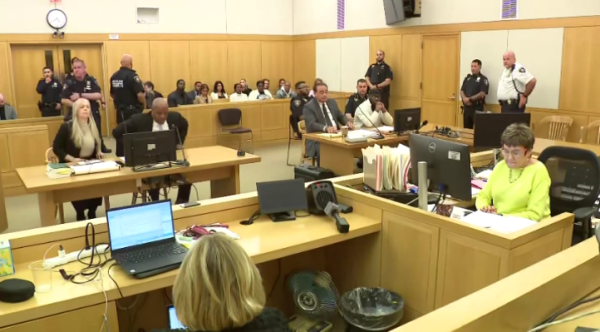
Jury deliberates for four days before a verdict
Jurors had to decide on seven criminal counts, requiring a unanimous vote to find Jenkins guilty. The highest charge was intentional second-degree murder.
Based on a motion by defense attorney MacDonald, Judge Fufidio added alternate possible verdicts of either intentional first-degree manslaughter or reckless second-degree manslaughter with voluntary intoxication if they acquitted him on the second-degree murder charge.
Other charges were felony second-degree murder during a burglary, first-degree burglary, third-degree possession of a weapon and first-degree robbery.
During his instructions to the jury before deliberations began, Judge Fufidio told them that premeditation was not required to find guilt and that intoxication was not a defense, but they may consider if Jenkins was incapable of having intent. They had to determine if his conduct contributed to Coto’s death and that the outcome of his actions could be reasonably foreseen.
Jurors sent more than a dozen notes to Judge Fufidio during their deliberations. The notes involved questions on the meaning of intent and the role of PCP in Jenkins’ guilt. One note asked, “if there’s no intent, is there a crime?”
They also re-watched the 50-minute video of Jenkins’ formal interrogation by Peekskill Detective Gonzalez. At one point Gonzalez said to Jenkins, “Maybe that shit you smoked led you to do what you did.”
Another note from the jury asked for any testimony regarding the effects of PCP. The court reporter reread the testimony of Dr. Gandhi, the neurologist who said the classic presentations of PCP use were aggression, combative, hallucination and paranoia.
A note from the jury on Nov. 3 asked if someone had to know or be aware they are committing a crime to have intent. Judge Fufidio read back the definition of intent to jurors again. Prior to the jury entering the court, Fufidio said, “They’re asking me to do their job. I’m not gonna do it,” and later said that jurors needed to use their common sense to see if there was proof of intent.
Another note that day asked the judge to reread the charges of criminal possession of a weapon in the third degree, which refers to Jenkins having used his boots as a “dangerous” instrument to kill Coto.
Shortly after the attack on May 14, 2024, the Peekskill Herald received an email from a person who claimed to know Jenkins. “He [Jenkins] prays for that lady every second of the day, he’s not even thinking of himself,” the email read. “He’s also accepting the responsibility of his actions, and clear of the consequences. However everyone knows if he was in his right state of mind, this would of never happened, and the police know that as well. He doesn’t have any violent history.”
Videos document Coto’s final moments
Before resting, Nagler played an eight-minute video compilation that began with Jenkins leaving Home Depot in Mohegan Lake at 1:09 p.m. on May 14. The video then shows him walk to the back of 900 South Street toward the apartment staircase.
Coto is then shown parking her Westchester County car on South Street at 2:57 p.m. Five minutes later, she walks in front of the deli and around the corner to the staircase.
The next scene shows a woman in the parking lot flagging down a police car and pointing to the building. Wilfredo Sanchez, who lived in Apartment 2, points up toward the staircase as police arrive.
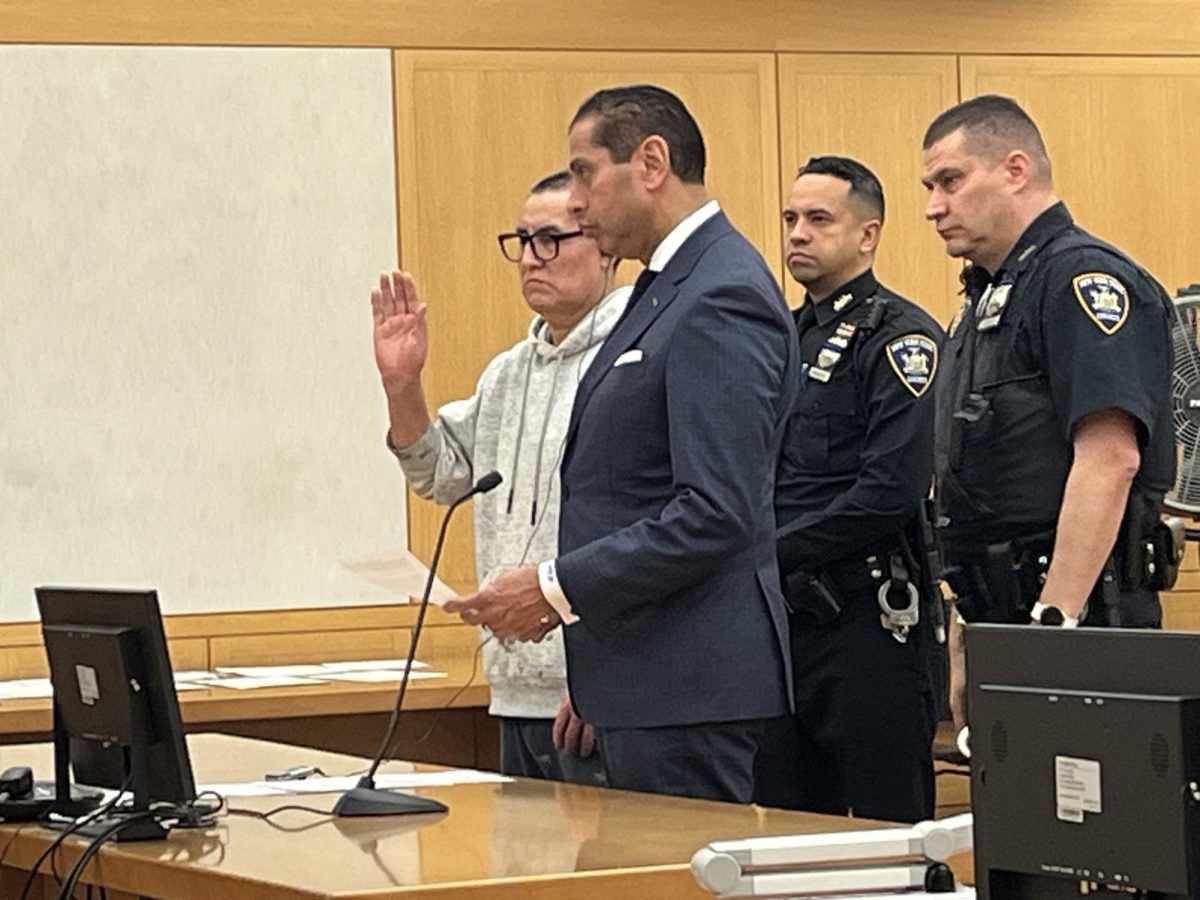
Jenkins is then heard yelling in the apartment on the police cam video and is tasered. Coto appears lying face down in a pool of blood. When the video ends, Nagler said, “the people rest. Jenkins then stood before Judge Fufidio and said, “I wish not to testify your honor” and the defense rested without presenting any witnesses.
Reactions to the verdict
Coto’s aunt Maria Gutierrez and her sister Dora Rodriquez, as well as Jenkins mother, were regular daily attendees on the courtroom benches. Gutierrez expressed her thanks to prosecutors. “I am really happy that we have almost come to a conclusion. It’s been terrible for us. I think my niece [Maria] is happy in Heaven,” Gutierrez told CBS News after the verdict.
Rodriquez, who drove to court in White Plains from her Connecticut home each day, was comforted by members of the DA’s office, who promised their support in the future as she continues to deal with the traumatic murder of her sister Maria.
In a statement, Westchester County District Attorney Susan Cacace said, “First and foremost, I want to thank the jurors for exercising their civic duty with such care and consideration.
“Maria Coto’s life was cut short on May 14, 2024. As proved during a multi-week trial, Hasseem Jenkins beat her until the nerves in her brain stem were severed beyond repair, hurling repeated epithets as she lay dying on the floor.
“Maria devoted her brief time on Earth to helping others. She was a petite woman with an uncommonly generous spirit. She will live on in all the lives she touched along the way.
“I am grateful to the jury for holding the defendant responsible for killing Maria. My office will continue to support Maria’s family and all crime victims in Westchester County.”
Coto was a member of Civil Service Employees Association (CSEA) Westchester County Unit 9200 and had been planning to retire.
“Nothing will ever make up for the tragic loss of Maria Coto, but we are grateful her loved ones and co-workers are finally seeing justice served,” said CSEA President Mary E. Sullivan in a statement. “On behalf of CSEA, I would like to thank everyone involved in bringing justice for our union sister.
“The fact that Maria was murdered when she was just trying to do her job once again highlights the important responsibility that counties have to ensure their workers make it home safe,” Sullivan said.
Legislation proposed in Albany would give caseworkers panic buttons to call for help while in the field and impose harsher jail sentences when caseworkers are assaulted.
“CSEA will continue to fight to ensure that workers are safer, including lobbying state and local governments. Maria Coto should be enjoying retirement right now. The only way we can truly honor her memory is by ensuring this never happens again,” Sullivan said.